
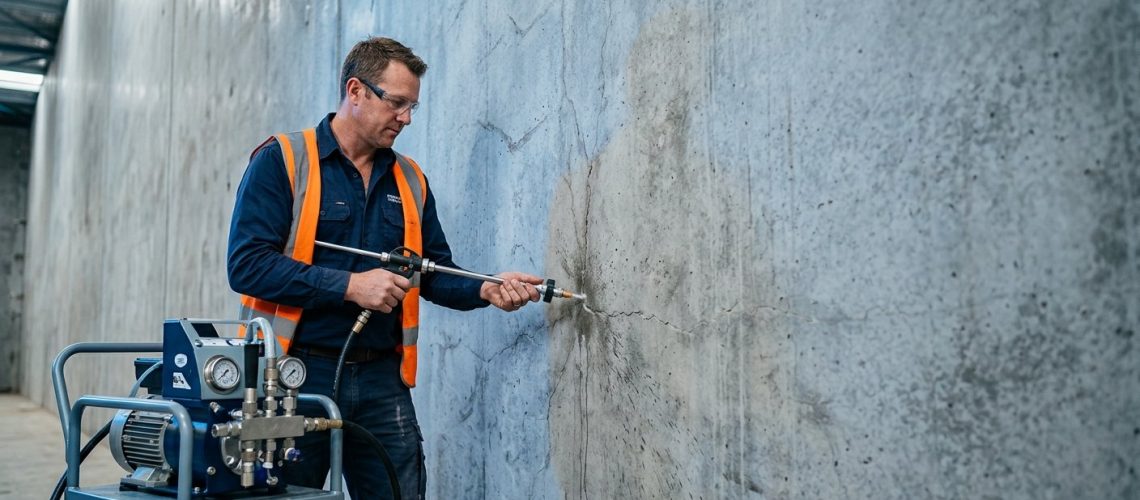
The most effective water intrusion solutions for concrete buildings in South Florida combine advanced injection technology with a thorough site assessment to permanently seal the source — not just the symptom. Property managers and building owners in Miami, Fort Lauderdale, and West Palm Beach need approaches engineered for saltwater exposure, high humidity, and the relentless thermal expansion that defines coastal concrete structures.
- Proprietary polyvinyl injection technology seals concrete leaks at the source, delivering a permanent fix backed by a 5-year warranty.
- Traditional patching and surface coatings address symptoms, not causes — water finds new pathways within months.
- South Florida’s saltwater environment and thermal cycling accelerate joint failure faster than inland climates.
- Non-disruptive repair methods mean tenants stay put and operations continue during the repair process.
- A professional on-site assessment is the essential first step — no method is appropriate without diagnosing the intrusion source.
Why Cutting-Edge Water Intrusion Solutions Matter Now
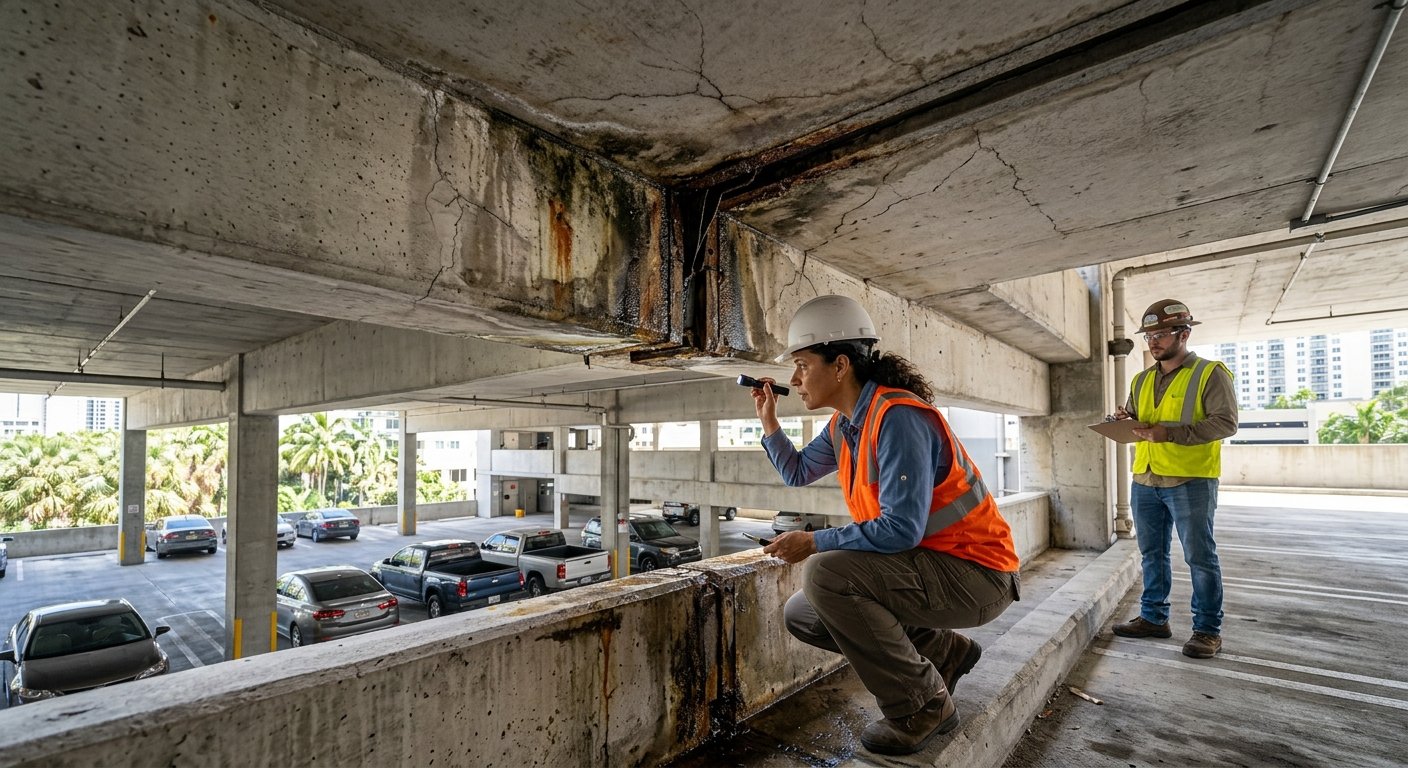
Concrete is not waterproof by nature. It is porous, and when expansion joints fail — as they inevitably do under South Florida’s thermal cycling and salt-laden air — water finds every microscopic pathway into the structure. What begins as a slow seep through a parking garage ceiling or a condominium podium deck can escalate into corroded rebar, spalling concrete, and costly structural remediation if left unaddressed.
The challenge facing commercial property managers and HOA boards is not simply finding a repair — it is finding one that holds. The American Concrete Institute recognizes that water is the primary degradation agent in reinforced concrete structures, with chloride-induced corrosion from saltwater exposure being among the most aggressive mechanisms. In South Florida, that threat is not theoretical. It is present at every coastal high-rise, every oceanfront condominium, and every parking structure within miles of the Atlantic or Gulf coast.
Expansion joints are designed to accommodate the natural movement of a concrete structure — but that movement also means they are the first line of failure when waterproofing materials degrade. In South Florida’s heat, concrete can expand and contract significantly across a single day, accelerating wear on traditional sealants far faster than in cooler climates.
The Limits of Traditional Concrete Waterproofing
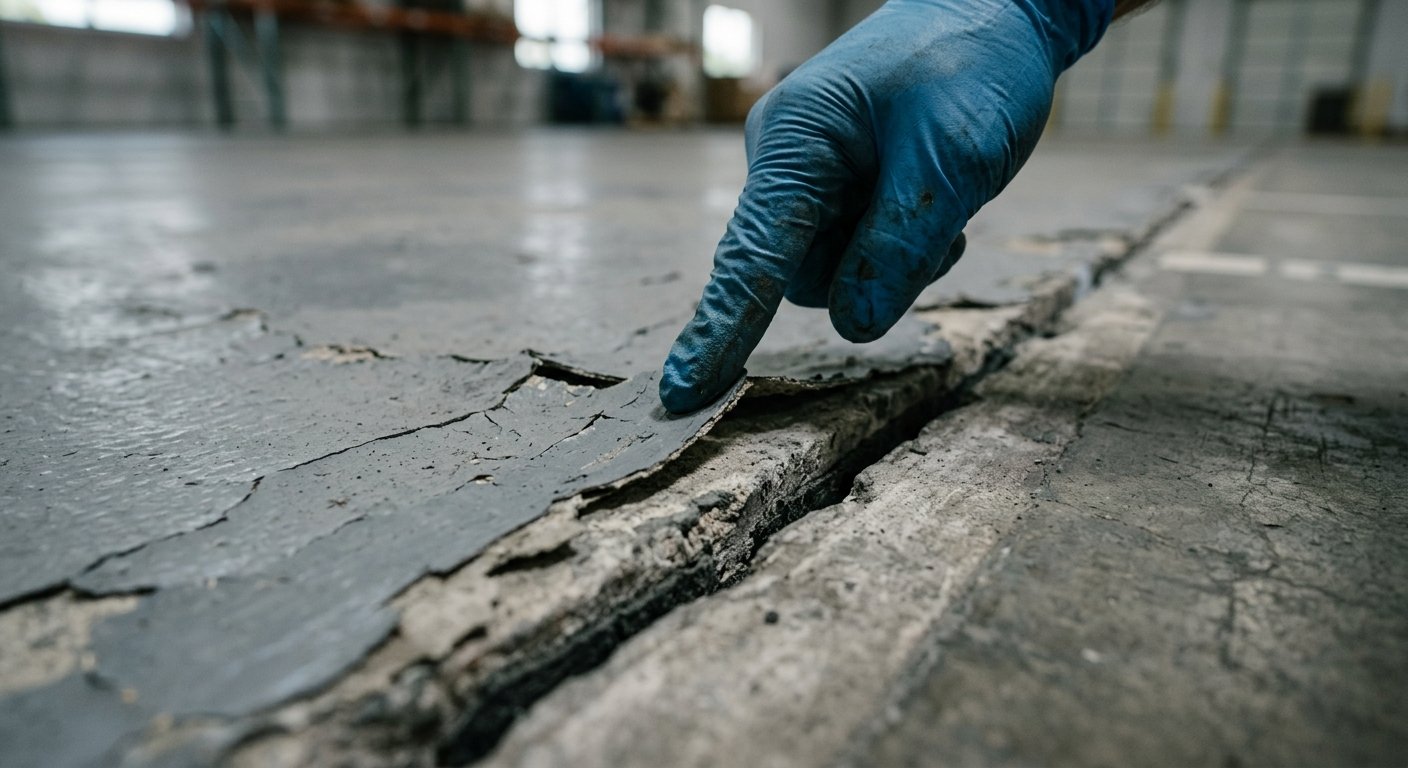
For decades, the standard response to a leaking concrete joint was one of three approaches: surface-applied coatings, hydraulic cement patching, or cementitious waterproofing membranes. Each has a role, but none addresses the dynamic nature of an active expansion joint under load.
Surface coatings sit on top of the concrete. When the joint moves — and it will — the coating cracks and water re-enters. Hydraulic cement is effective for stopping active water flow temporarily, but it bonds rigidly to a surface designed for movement, meaning failure often recurs within a single South Florida rainy season. Cementitious membranes offer a layer of protection but are vulnerable to the same joint movement problem.
| Comparison factor | Traditional methods | Polyvinyl injection technology |
|---|---|---|
| Addresses root cause | Rarely — treats surface symptoms | Yes — seals the intrusion point directly |
| Flexibility under movement | Rigid; cracks with joint movement | Remains flexible and adhered |
| Tenant disruption | High — often requires demolition | Minimal — non-disruptive process |
| Warranty | Varies; typically short-term | 5-year warranty on all repairs |
| Saltwater resistance | Moderate; degrades under chloride exposure | Engineered for coastal environments |
How Proprietary Polyvinyl Injection Technology Works
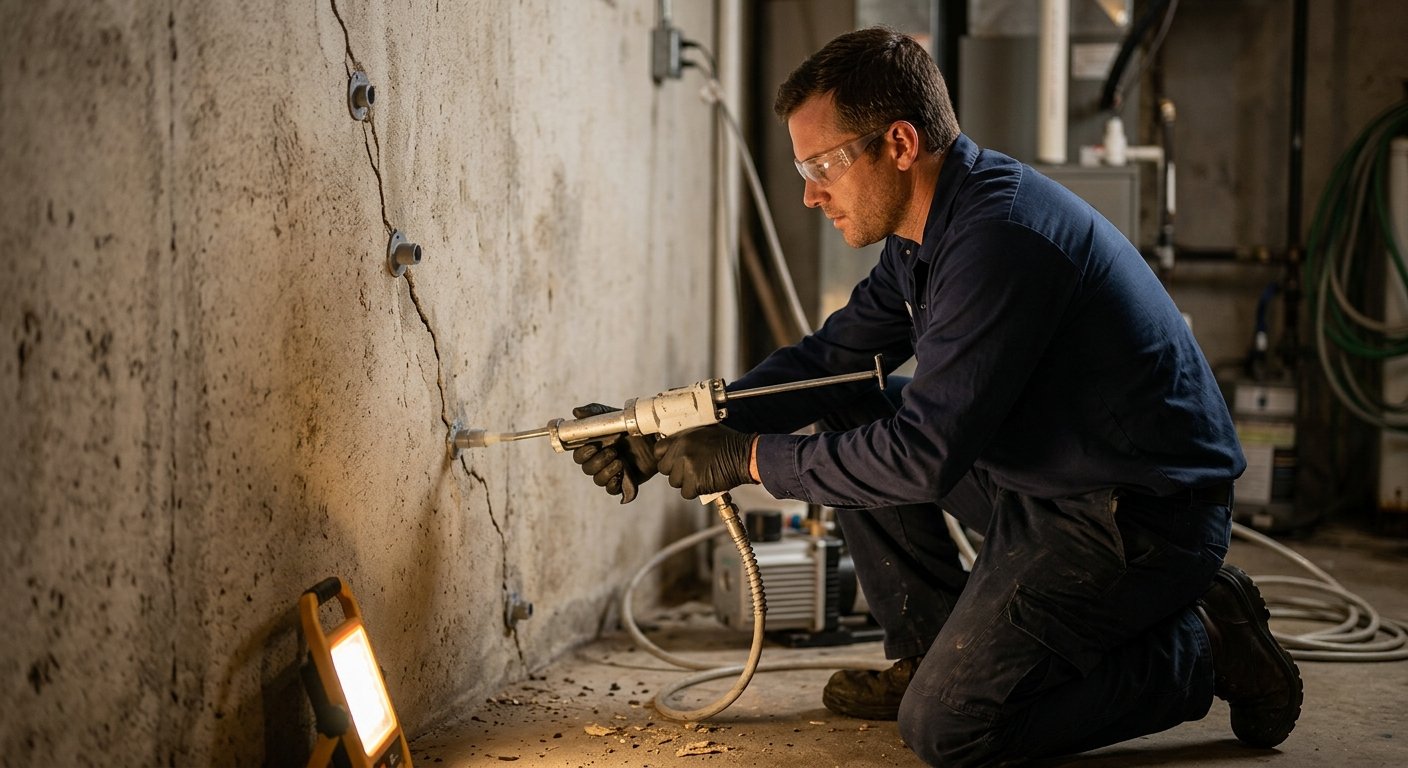
CL Wizard’s approach to innovative concrete leak repair centers on a proprietary polyvinyl injection system that delivers sealant directly into the concrete crack or expansion joint — not onto its surface. The process begins with a precise assessment of the intrusion point to map how water is traveling through the structure. This step is non-negotiable; the injection profile is calibrated to the specific joint geometry, concrete density, and active water pressure present at that location.
Once mapped, ports are installed at calculated intervals along the joint or crack. Polyvinyl compound is then injected under controlled pressure, filling voids, cracks, and honeycombed areas that surface methods cannot reach. The material expands on contact with moisture and cures into a flexible, watertight seal that accommodates the ongoing thermal movement of the structure rather than fighting against it.
On-site assessment
A licensed specialist inspects the structure, maps water pathways, and determines the appropriate injection profile for the specific failure points.
Port installation
Injection ports are installed at precise intervals along the joint or crack without requiring demolition of surrounding concrete or removal of finishes.
Controlled injection
Proprietary polyvinyl compound is injected under measured pressure, penetrating voids and sealing the intrusion pathway from the inside out.
Cure and verification
The material cures into a flexible, durable seal. The repair zone is verified for water tightness before the team leaves the site.
Warranty documentation
All completed repairs are backed by CL Wizard’s 5-year warranty, with documentation provided to the property owner or HOA board.
South Florida’s Unique Concrete Challenge
What makes concrete leak repair in Miami, Fort Lauderdale, and West Palm Beach distinctly more demanding than inland markets comes down to three compounding forces: chloride exposure from saltwater and salt-laden air, extreme humidity levels that drive moisture into every available pore, and thermal cycling that pushes expansion joints through their full range of movement year-round — not just seasonally.
The Federal Highway Administration’s research on chloride-induced corrosion confirms that coastal concrete structures face accelerated rebar corrosion timelines compared to non-coastal environments. In practice, this means that a failed expansion joint in a Fort Lauderdale parking garage is not just a waterproofing problem — it is a structural timeline problem if water is reaching the steel reinforcement inside the slab.
Advanced concrete waterproofing technology must account for this environment explicitly. A repair method proven in dry climates or interior applications may perform very differently when exposed to South Florida’s conditions. CL Wizard’s system was developed and refined specifically for coastal South Florida structures, which is why it carries a 5-year warranty even in these demanding environments.
A repair method that doesn’t account for chloride exposure and daily thermal movement isn’t a permanent solution — it’s a delayed problem.
Non-Disruptive Repair: What It Means for Your Property
For commercial building owners and HOA boards, downtime is not an abstraction — it is lost revenue, displaced residents, and frustrated tenants. Traditional concrete repair methods that require saw-cutting, demolition of deck coatings, or removal of interior finishes can take days or weeks to complete and often trigger additional costs in temporary relocation, loss of parking access, or business interruption.
CL Wizard’s non-disruptive leak repair approach changes that equation. Because the injection process works from accessible surfaces without requiring demolition, most repair projects allow the building to remain fully operational throughout. Parking garages continue functioning. Residents remain in their units. Commercial tenants maintain normal business hours. The work is precise, targeted, and contained.
When evaluating any concrete leak repair proposal, ask specifically how the contractor plans to address active joint movement after the repair is complete. A rigid patch in a dynamic expansion joint is a temporary fix regardless of what it’s called. The answer reveals whether the method is truly engineered for the problem — or just for the invoice.
This matters particularly for condominium associations in Miami-Dade and Broward counties where Florida’s Structural Integrity Reserve Study requirements now mandate that HOAs account for waterproofing and structural maintenance in their reserve funding. Board members who can demonstrate a permanent, warrantied repair solution are in a much stronger position when facing reserve study audits and owner inquiries.
Recognizing When You Need Advanced Concrete Repair
Not every wet spot on a parking deck ceiling is a structural emergency — but every water intrusion point in a concrete building is a degradation clock running in real time. Common indicators that a property needs a professional assessment include:
- Efflorescence (white mineral deposits) streaking down concrete surfaces, indicating ongoing water movement through the slab
- Active drips or pooling below expansion joints in parking structures during or after rain
- Rust staining on concrete surfaces, which signals that water has reached the rebar
- Bubbling or delamination of existing coatings or membranes at joint locations
- Recurring leaks in the same location after previous patch repairs
Recurring leaks after patching are particularly telling. When the same joint fails a second or third time after surface treatment, the issue is not the patch — it is the method. Permanent concrete leak solutions require addressing the pathway water is using, not just the point where it becomes visible. Learn more about comprehensive approaches on the water intrusion solutions and concrete expansion joint repair pages, or explore the technical background on concrete slab waterproofing.
Frequently Asked Questions
How is polyvinyl injection different from standard epoxy crack injection?
Epoxy injection creates a rigid bond — appropriate for structural cracks in static concrete, but problematic in expansion joints designed to move. Polyvinyl-based compounds cure into a flexible seal that accommodates ongoing joint movement, making them far better suited to the dynamic thermal expansion common in South Florida concrete structures. The material also reacts with moisture during cure, which is an advantage in active-leak conditions.
Will repairs require tenants or residents to vacate during the process?
In the vast majority of cases, no. CL Wizard’s non-disruptive repair technology is specifically designed to allow buildings to remain operational during work. The injection process is targeted and contained, without the demolition, odor, or extended cure times associated with large-scale waterproofing membrane installations. Each project is assessed individually, and any access requirements are communicated clearly before work begins.
What does the 5-year warranty cover?
CL Wizard’s 5-year warranty covers the repaired intrusion points treated during the project. It reflects confidence in the permanent nature of the polyvinyl injection repair under normal building conditions. As with any warranty, the specific terms are reviewed with the property owner or HOA board at the time of project completion.
Can water intrusion be repaired from the interior without accessing the exterior deck?
In many cases, yes. One of the practical advantages of injection-based repair is that it can often be performed from the interior side of the concrete — beneath a parking deck or through a ceiling — without requiring access to the top surface. This depends on the joint location, the water pathway, and the structural configuration. A site assessment determines the optimal injection approach for each specific condition.
How soon after a repair can the area return to normal use?
Cure times vary by product formulation, ambient temperature, and moisture conditions, but the non-disruptive nature of polyvinyl injection typically allows for much faster return-to-use than membrane-based alternatives that require extended dry cure windows. Your project specialist will provide a specific timeline based on site conditions identified during the assessment.
Schedule a Professional Assessment
A licensed CL Wizard specialist will evaluate your property’s specific water intrusion points and recommend the right solution — no guesswork, no unnecessary demolition, and no obligation.

About CL Wizard
CL Wizard provides permanent concrete leak repair solutions for South Florida commercial property managers, building owners, and HOAs using proprietary polyvinyl injection technology. Unlike traditional waterproofing methods that offer temporary fixes, CL Wizard's non-disruptive approach permanently seals concrete expansion joints and water intrusion points without requiring extensive demolition or tenant displacement. The company specializes in addressing South Florida's unique challenges including saltwater exposure, humidity, and thermal expansion in high-rises, condominiums, and parking structures. Visit clwizard.com →
