
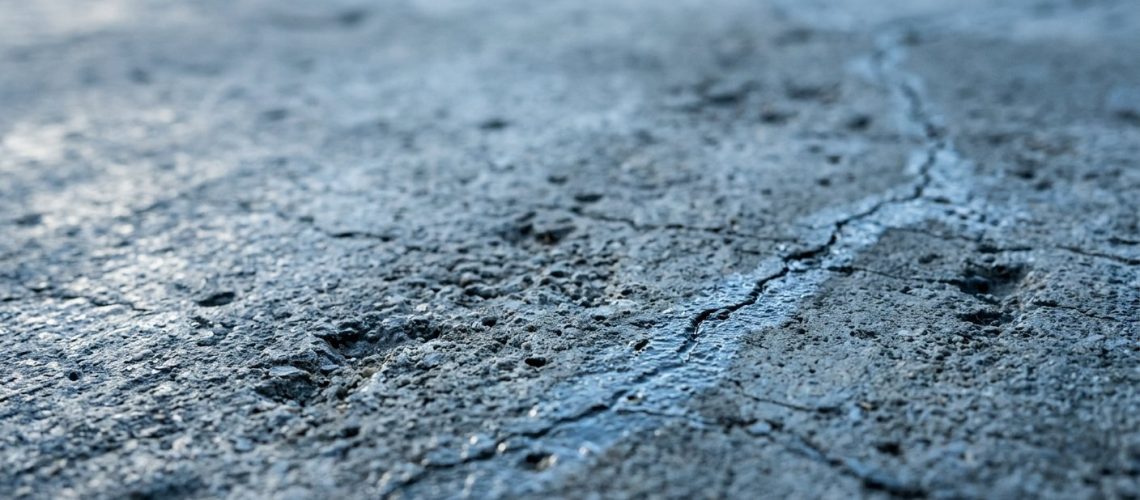
Water intrusion in concrete occurs when moisture exploits porous pathways, cracks, and expansion joints in a structure’s envelope. For commercial property managers and HOA boards in South Florida, this means saltwater-laden humidity and thermal cycling constantly pressure every concrete surface. Identifying the entry mechanism — porosity, joint failure, or crack propagation — determines which repair method will deliver a lasting result rather than a temporary patch.
- Concrete is inherently porous; water moves through capillary channels, cracks, and failed expansion joints, not just visible gaps.
- South Florida’s saltwater environment accelerates corrosion of rebar and degrades conventional sealants faster than inland climates.
- Traditional caulks, silicone, and urethane fillers address surface symptoms; proprietary polyvinyl injection reaches the leak source inside the joint.
- Non-disruptive repair methods protect tenants and building operations while delivering durable, warranted results.
- A professional assessment is always the starting point — no repair method is appropriate without identifying the intrusion pathway.
Why Concrete Lets Water In
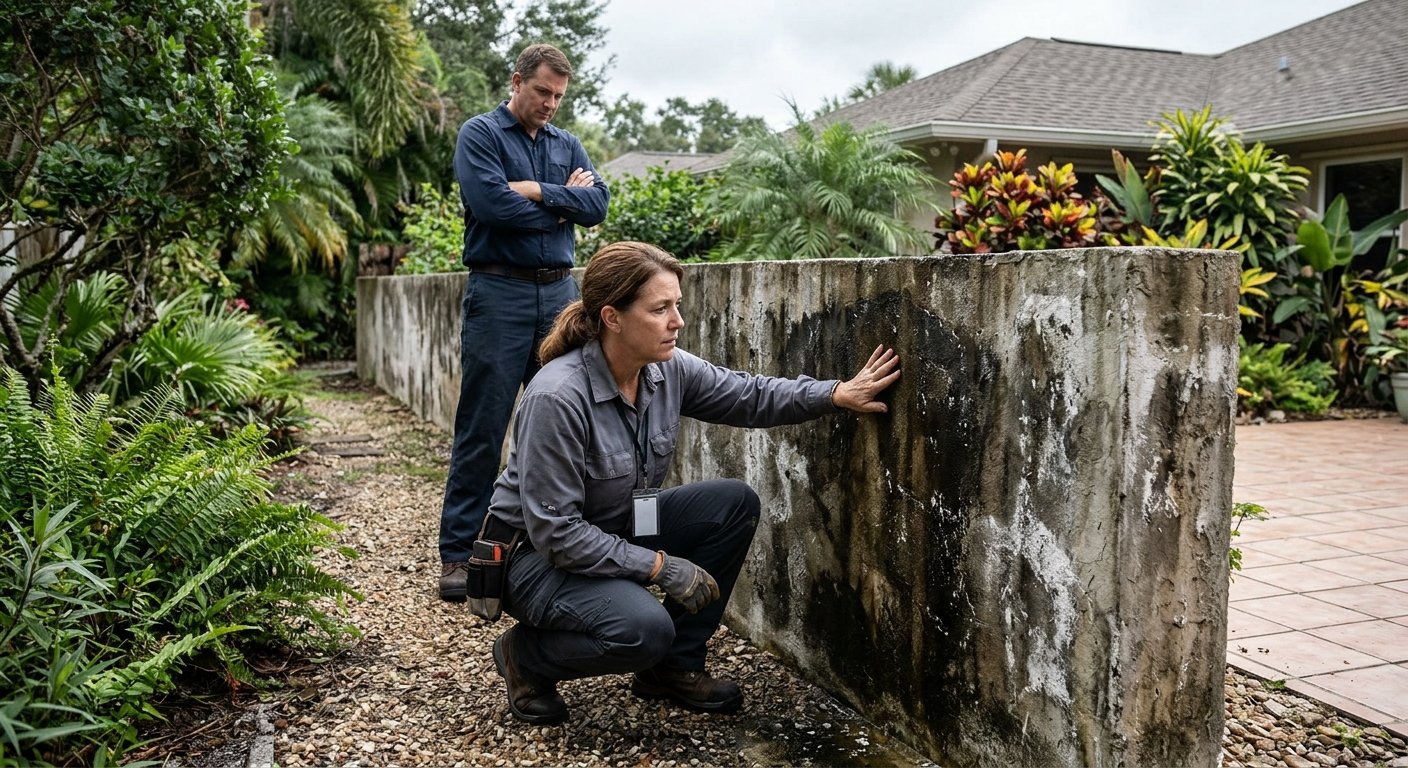
A common misconception among property managers is that concrete is a solid, impermeable barrier. In reality, concrete is a porous composite material. During the hydration process, water used to mix cement paste leaves behind a network of microscopic capillary channels as it evaporates. According to the Portland Cement Association, the water-to-cement ratio directly governs permeability: higher ratios produce more capillary voids, making the hardened slab more susceptible to concrete porosity water penetration.
In a South Florida high-rise or parking structure, this baseline porosity is compounded by three site-specific stressors: saltwater chloride exposure, sustained high humidity (often exceeding 70% relative humidity year-round), and thermal cycling. Concrete expands and contracts with temperature shifts — the coefficient of thermal expansion for concrete is approximately 5.5 to 7.3 × 10⁻⁶ per °F, according to ACI 318. Over months and years, that cyclic movement widens hairline cracks and opens expansion joints beyond what surface sealants can accommodate.
The Three Primary Intrusion Pathways
- Capillary absorption: Moisture wicks through microscopic pores in the concrete matrix itself, often appearing as damp patches or efflorescence rather than active drips.
- Crack penetration: Structural or shrinkage cracks form direct channels from the exterior surface to the interior, allowing water to flow under hydrostatic pressure.
- Expansion joint failure: Joints are designed to accommodate movement, but conventional filler materials — silicone, urethane, and polyurethane caulks — harden, delaminate, or degrade under UV exposure and repetitive thermal cycling, breaking the watertight seal.
Understanding which pathway is active matters enormously. A damp patch driven by capillary wicking requires a different treatment strategy than an actively leaking expansion joint in a parking deck. This is why no ethical repair specialist should diagnose remotely or prescribe a fix without a hands-on site assessment.
Chloride ions carried by South Florida’s saltwater air penetrate porous concrete and reach embedded rebar. Once chlorides exceed the corrosion threshold at the steel surface, rebar begins to rust. Rust expands at roughly three times the volume of steel, generating internal pressure that causes spalling and delamination — damage that is far more costly to remediate than the original water intrusion.
How Traditional Repair Methods Fall Short
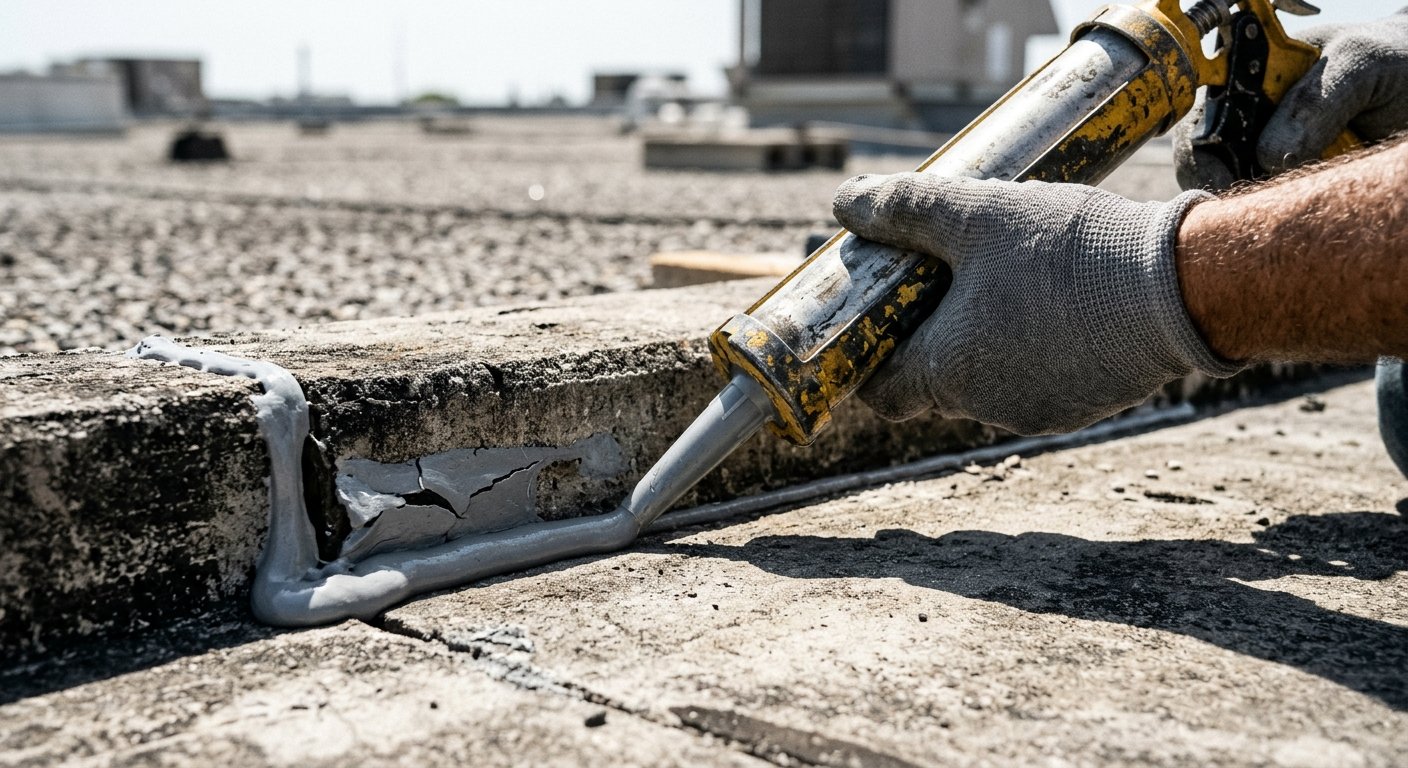
For decades, the standard response to a leaking expansion joint or concrete crack in a commercial building was to rout out the damaged material and re-pack it with a flexible sealant — silicone, polyurethane caulk, or epoxy injection. Each has a role in construction, but each carries limitations that matter acutely in South Florida’s environment.
| Method | How It Works | Primary Limitation |
|---|---|---|
| Silicone caulk | Surface-applied sealant bonds to joint edges | UV degradation, limited movement accommodation, adhesion failure on damp substrates |
| Polyurethane caulk | Flexible filler installed in routed joint | Hardens over time; loses elasticity; must be removed and replaced repeatedly |
| Epoxy injection | Rigid filler injected into cracks | Brittle under thermal cycling; re-cracks adjacent to the repair as joint moves |
| Hydraulic cement | Fast-setting plug for active leaks | Temporary; does not address underlying pathway or joint movement |
The pattern with these approaches is predictable: each requires periodic reapplication, generates disruption to building occupants, and often masks the intrusion point without eliminating it. Property managers in Miami, Fort Lauderdale, and West Palm Beach who have gone through multiple caulk replacement cycles understand this cycle intimately. For a deeper look at how the product landscape has shifted, see our overview of concrete repair products that actually perform in 2026.
Polyvinyl Injection: A Different Mechanism
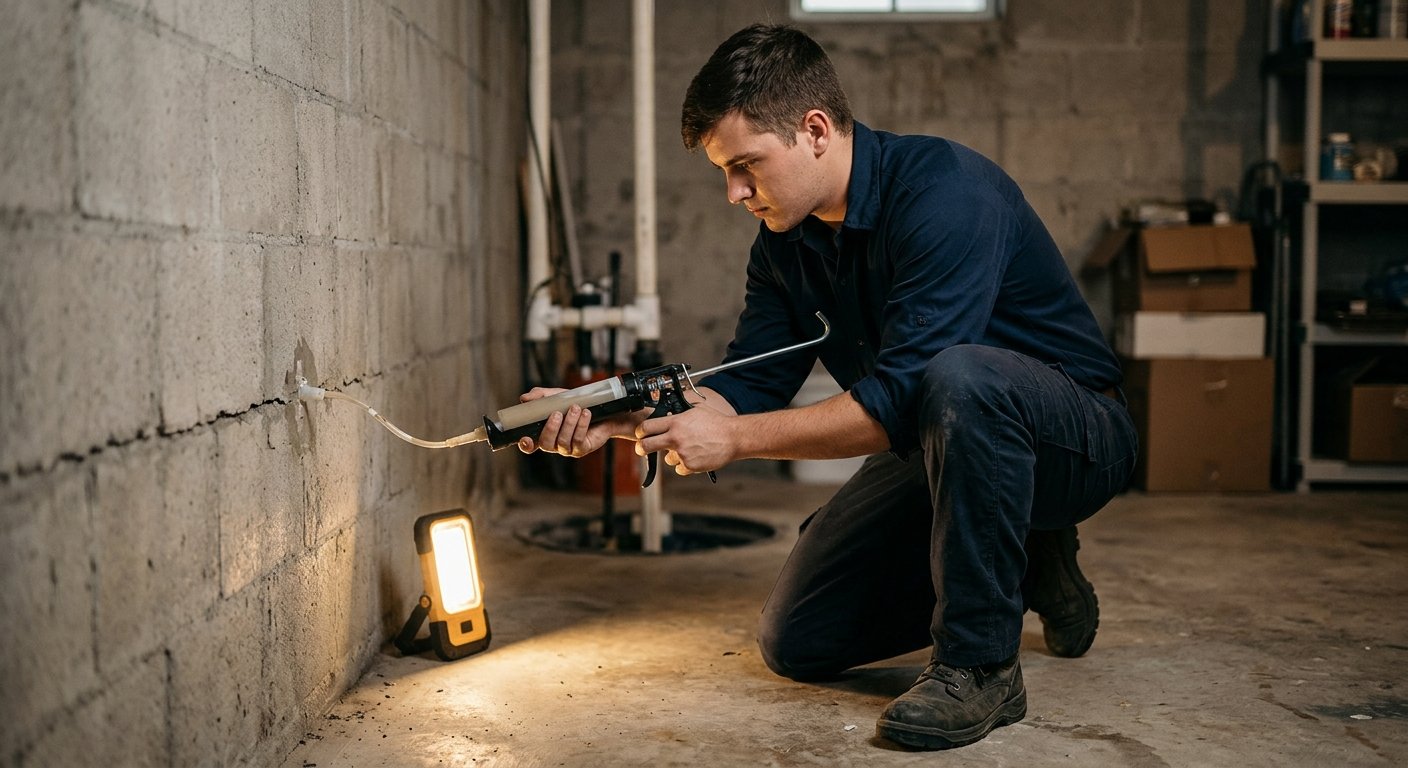
CL Wizard’s proprietary polyvinyl injection technology works on a fundamentally different principle than surface-applied sealants. Rather than covering the joint opening, the injection delivers a specialized polyvinyl compound directly into the joint substrate — reaching the active leak path inside the concrete assembly, not just the face of it.
The compound is formulated to remain flexible after curing, which is critical for concrete expansion joints. Unlike rigid epoxy, the cured polyvinyl material moves with the joint as thermal expansion and contraction occur, maintaining the seal across seasonal temperature cycles. This is the key failure point of conventional concrete water damage repair: stiff, brittle repairs in a moving joint are a temporary fix by definition.
Expansion joints in South Florida parking structures and high-rise podium decks can experience movement of several millimeters per thermal cycle. A sealant material that cannot accommodate this displacement will eventually debond or crack. The polyvinyl compound used in CL Wizard’s process is selected specifically for elongation properties that match the expected joint movement range in concrete structures common to this region.
The process is also engineered to be non-disruptive. There is no saw-cutting, no demolition of surrounding concrete, and no requirement to close off sections of a parking structure or residential corridor for extended periods. For occupied condominiums and commercial properties where tenant satisfaction and operational continuity are management priorities, this distinction is significant. You can explore the full scope of concrete expansion joint repair solutions to understand where polyvinyl injection fits within a broader maintenance strategy.
The Repair Process: What to Expect
Site assessment
A licensed specialist visits the property to trace the active intrusion pathway, identify whether the source is a joint, crack, or porous slab section, and document the extent of damage. No repair recommendation is made without this step.
Surface preparation
The injection ports and surrounding area are prepared without requiring heavy demolition. Existing failed sealant is removed from the intrusion zone so the polyvinyl compound can reach the substrate directly.
Polyvinyl injection
The proprietary compound is injected at controlled pressure into the joint or crack, filling the internal pathway and bonding to the surrounding concrete matrix. The material cures in place to form a flexible, watertight seal.
Verification and documentation
The treated area is inspected and the repair is documented. CL Wizard’s 5-year warranty on all repairs is issued at this stage, giving property managers a clear assurance period backed by a licensed and insured contractor.
A repair that reaches the source of water intrusion inside the joint will always outperform one that addresses only the surface.
South Florida-Specific Considerations
Commercial concrete slab waterproofing in South Florida must account for conditions that simply do not apply in most other markets. Chloride-laden ocean air reaches properties miles inland from Miami Beach to West Palm Beach, and the combination of high humidity with intense UV radiation degrades surface-applied materials faster than their rated service lives would suggest. For a comprehensive breakdown of how these regional factors interact with concrete structures, the South Florida water intrusion guide covers the regional picture in detail.
HOA boards and building owners managing oceanfront or Intracoastal-adjacent properties face accelerated joint deterioration timelines compared to inland commercial properties. Inspection frequency should reflect this — waiting for visible water infiltration to appear at a ceiling or interior wall typically means the moisture has been migrating through the slab for months. Proactive joint assessments, particularly after summer storm seasons, are a sound investment in concrete water damage repair before the problem escalates to rebar corrosion or spalling.
For properties with slab-on-grade sections or podium decks over occupied parking, the concrete slab waterproofing resource addresses the specific challenges of horizontal concrete surfaces exposed to hydrostatic pressure from below or pooling from above.
Frequently Asked Questions
What causes water intrusion in concrete parking structures?
The primary causes are failed expansion joints, shrinkage and structural cracks, and the inherent capillary porosity of concrete. In South Florida parking structures, chloride exposure from saltwater air accelerates rebar corrosion, which can widen cracks from the inside out. Regular joint inspection and prompt sealing of any pathway are the most effective preventive measures.
How is polyvinyl injection different from epoxy injection?
Epoxy injection produces a rigid, structural fill that performs well in static cracks but is brittle under thermal movement. Polyvinyl injection uses a flexible compound engineered to move with the joint as the concrete expands and contracts — making it far more appropriate for active expansion joints in South Florida’s climate. The repair accommodates movement rather than resisting it until it fails.
Will the repair disrupt tenants or building operations?
CL Wizard’s non-disruptive repair technology is specifically designed to minimize operational impact. There is no heavy demolition, no extended section closures, and no requirement for tenant relocation. The work is typically contained to the joint or crack area identified in the assessment.
How long does the repair warranty last?
CL Wizard provides a 5-year warranty on all repairs. This warranty period covers the treated joints and reflects confidence in the permanence of the polyvinyl injection process when applied to the appropriate substrate and intrusion type.
Can water intrusion be diagnosed without a site visit?
No. The source of water intrusion in concrete is rarely obvious from photographs or descriptions alone. Active leaks can originate several meters from where moisture appears at the surface. A professional on-site assessment is always required to identify the correct pathway and prescribe an appropriate repair method.
Schedule a Professional Assessment
If your South Florida property is showing signs of water intrusion — damp interior walls, stained ceilings, or visible joint deterioration — the next step is a site assessment by a licensed specialist. CL Wizard serves commercial properties, condominiums, and HOAs across Miami, Fort Lauderdale, and West Palm Beach.

About CL Wizard
CL Wizard provides permanent concrete leak repair solutions for South Florida commercial property managers, building owners, and HOAs using proprietary polyvinyl injection technology. Unlike traditional waterproofing methods that offer temporary fixes, CL Wizard's non-disruptive approach permanently seals concrete expansion joints and water intrusion points without requiring extensive demolition or tenant displacement. The company specializes in addressing South Florida's unique challenges including saltwater exposure, humidity, and thermal expansion in high-rises, condominiums, and parking structures. Visit clwizard.com →
