
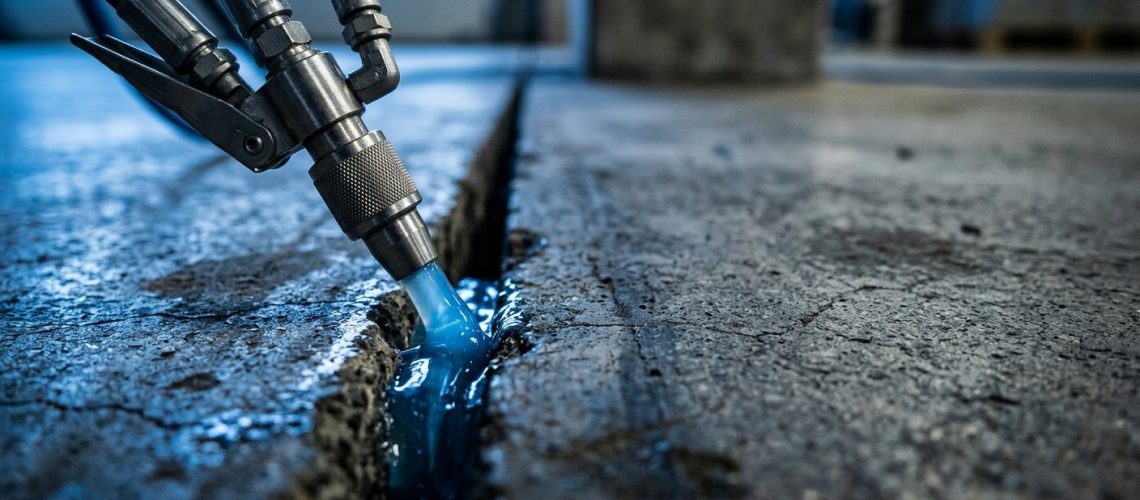
CL Wizard’s proprietary concrete leak repair method uses a specialized polyvinyl injection process to permanently seal water intrusion points in concrete expansion joints, cracks, and voids. Unlike surface-applied coatings or temporary fillers, the material is injected directly into the breach, expanding to fill the void from within. This non-disruptive approach is engineered specifically for commercial high-rises, condominiums, and parking structures in South Florida.
- Polyvinyl injection works from inside the concrete—not from the surface—creating a durable, internal seal.
- South Florida’s saltwater exposure, humidity, and thermal expansion cycles demand a repair method that adapts to concrete movement.
- The process requires no demolition, no tenant displacement, and typically causes minimal operational disruption.
- All repairs carry a 5-year warranty.
- A professional on-site assessment is required before any repair recommendation—remote diagnosis is not reliable for concrete systems.
Why Standard Concrete Repair Methods Fall Short in South Florida
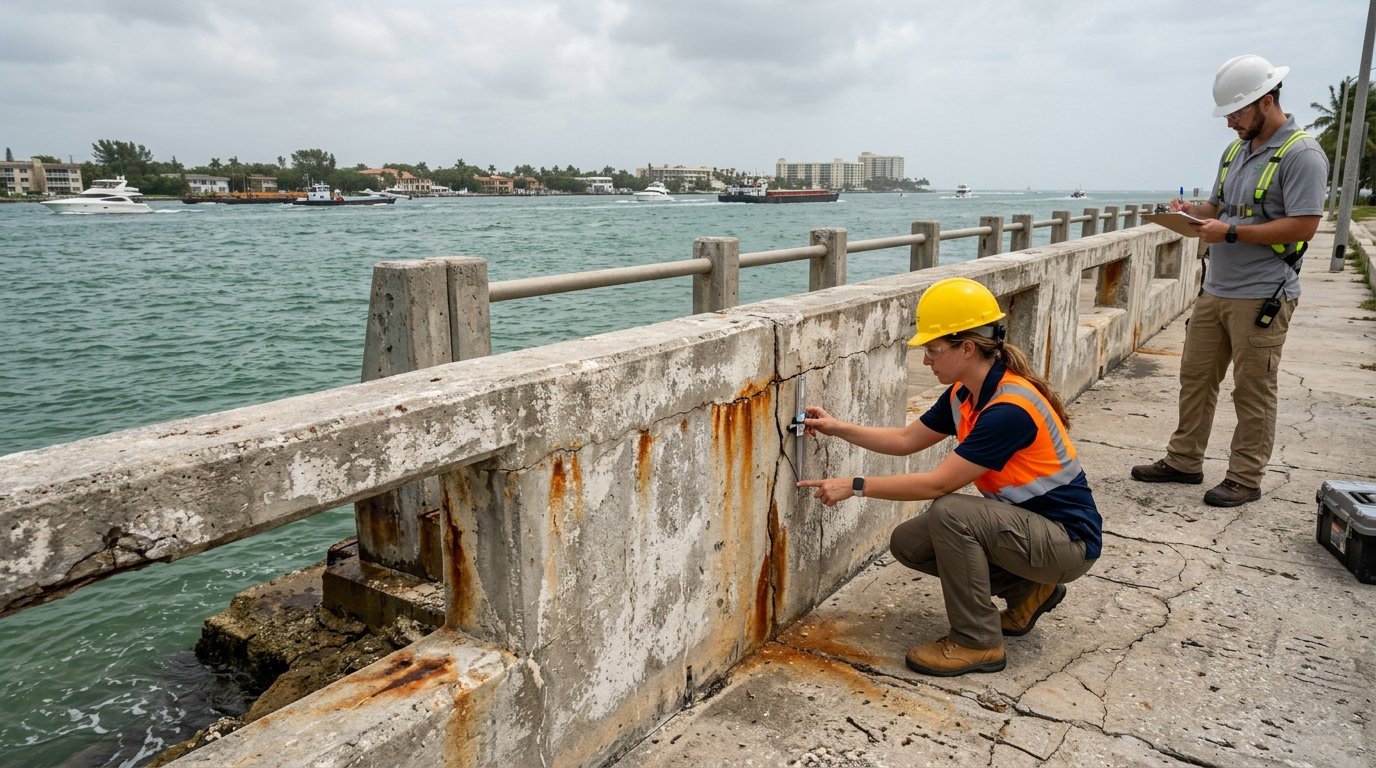
Concrete is remarkably strong in compression but vulnerable at its joints, cracks, and interfaces—exactly where water finds its way in. In South Florida’s coastal environment, that vulnerability is amplified. Saltwater aerosols accelerate chloride-induced corrosion of embedded reinforcement. Relative humidity frequently exceeds 80 percent, keeping concrete surfaces perpetually damp. And the region’s intense thermal cycles cause concrete to expand and contract daily, stressing every joint and seal in the system.
Traditional approaches—epoxy injection, hydraulic cement, polyurethane foam, or surface-applied elastomeric coatings—each address only part of the problem. Epoxy bonds well but is rigid, meaning it fractures when the joint moves. Hydraulic cement stops active water flow momentarily but doesn’t accommodate thermal movement. Surface coatings are only as effective as the substrate beneath them; once the concrete moves or the adhesion fails, the coating peels and water intrusion resumes. For property managers dealing with recurring leaks in a parking garage or high-rise podium deck, these are familiar frustrations.
Concrete expands and contracts with temperature. A 100-foot concrete deck exposed to Miami’s daily temperature swings can move several millimeters seasonally. Any repair material that cannot flex with that movement will eventually crack and fail—no matter how well it was originally applied.
The core issue is that a repair material must do two things simultaneously: seal water out and accommodate structural movement. Most conventional products do one or the other. CL Wizard’s proprietary polyvinyl injection technology is engineered to do both.
Inside the Proprietary Polyvinyl Injection Process
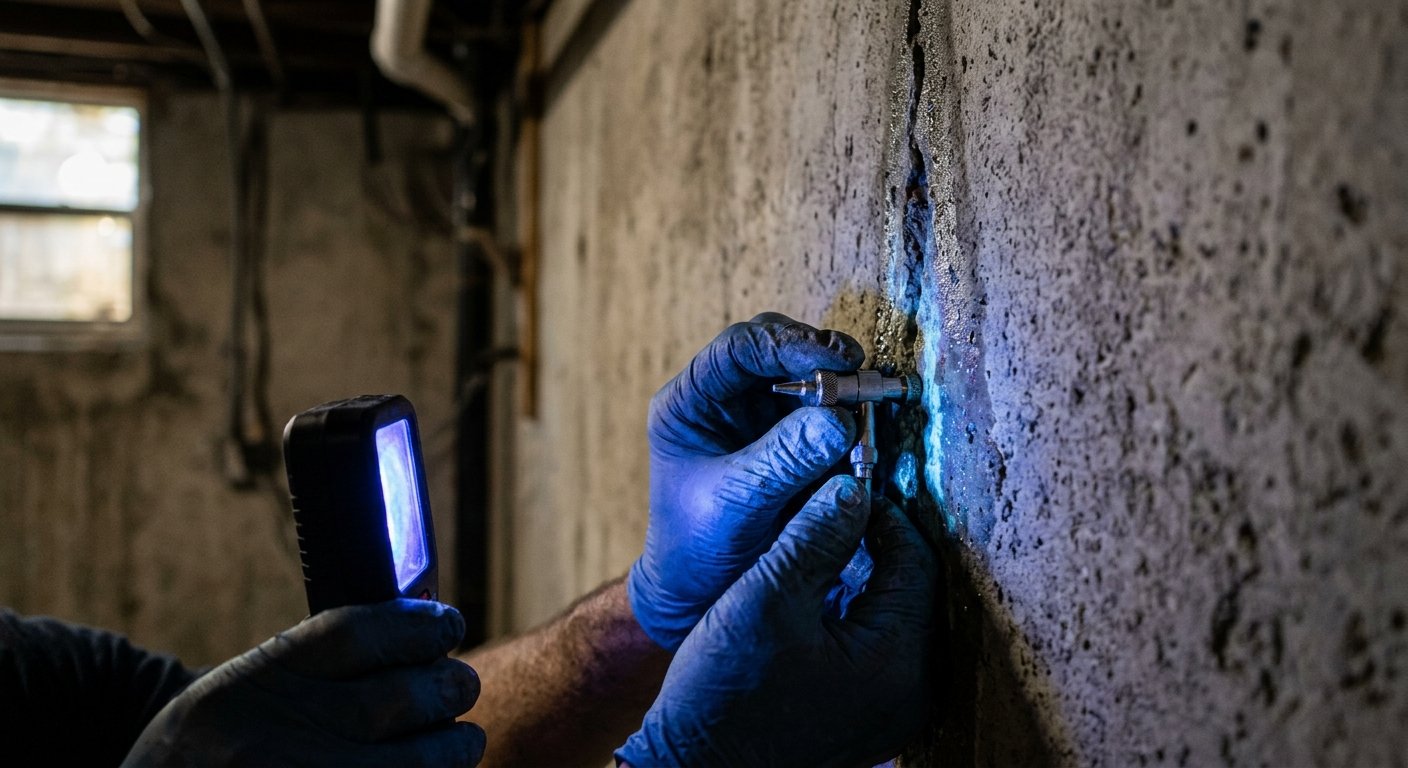
The unique concrete injection method CL Wizard uses begins with a diagnostic phase, not a repair phase. Before any material is introduced, a specialist inspects the affected area to map the full extent of water infiltration—where it enters, how it travels through the slab or joint, and where it exits. This matters because water intrusion in concrete rarely travels in a straight line. Hydrostatic pressure drives water along paths of least resistance, and those paths can extend far from the visible wet spot.
Site Assessment & Mapping
A CL Wizard technician performs an on-site inspection to identify all water intrusion points, trace migration paths through the concrete, and confirm whether the issue originates in expansion joints, cracks, honeycombing, or a combination of these.
Port Installation
Small injection ports are installed at calculated intervals along the intrusion path—typically spaced to ensure complete material coverage through the void or joint. No core drilling or jackhammering is required.
Polyvinyl Injection
The proprietary polyvinyl material is injected under controlled pressure. As it travels through the void, it reacts with moisture, expands to fill the space, and cures into a flexible, watertight seal that bonds to the concrete matrix on both sides.
Curing & Verification
Once injected, the material cures in place. The technician verifies the seal is complete before closing ports and clearing the work area—typically with minimal impact to building operations.
Documentation & Warranty Issuance
The completed repair is documented and backed by CL Wizard’s 5-year warranty, giving property managers a clear record for HOA boards, lenders, or building inspectors.
What Makes Polyvinyl the Right Material for South Florida Concrete
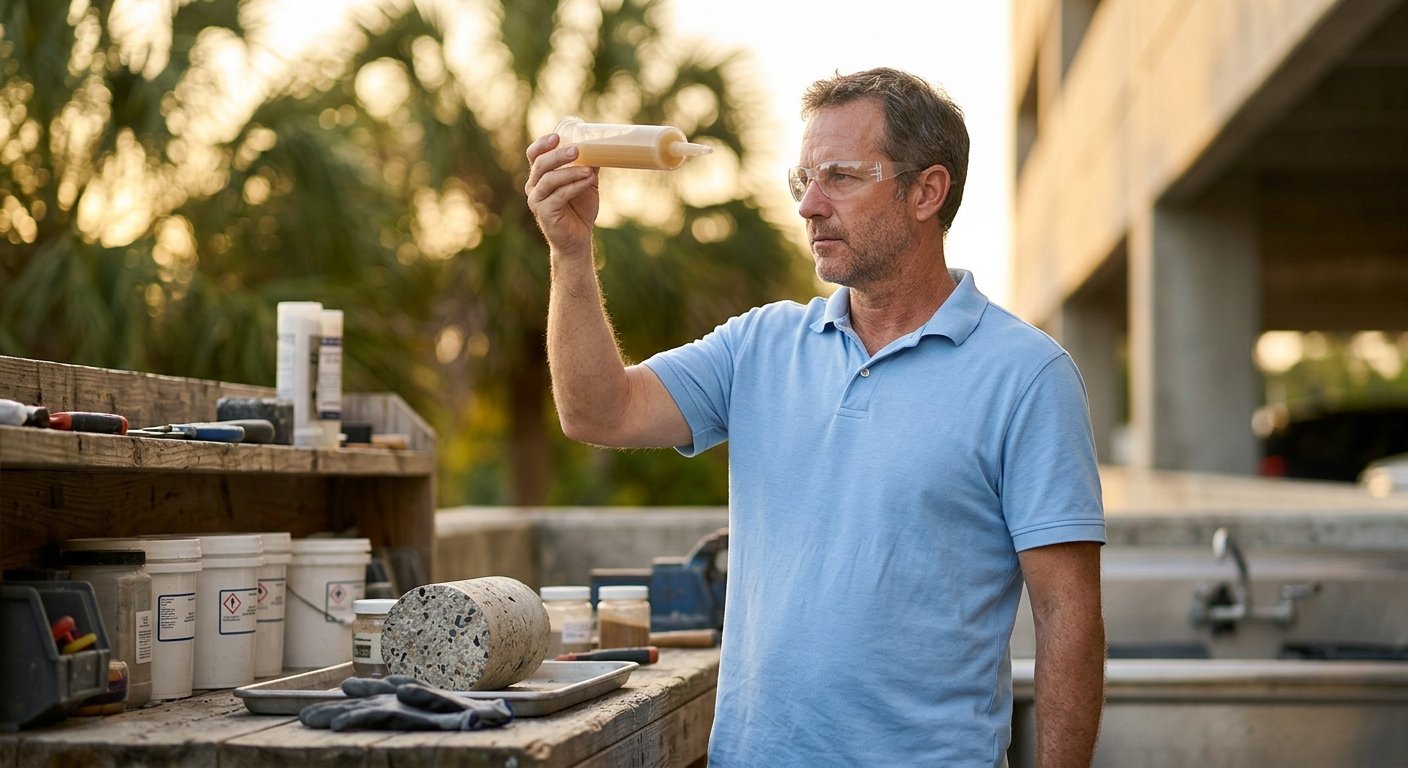
The selection of polyvinyl as the injection medium is not arbitrary. Polyvinyl-based compounds offer a combination of properties that align directly with South Florida’s structural and environmental demands. According to ACI (American Concrete Institute) guidance on concrete repair materials, effective crack injection compounds must demonstrate compatibility with the substrate, resistance to moisture degradation, and sufficient flexibility to accommodate ongoing movement without debonding.
Polyvinyl meets these criteria in several ways. It is chemically stable in the presence of moisture—in fact, it uses moisture during the curing reaction, which is advantageous in a wet concrete environment where fully drying the substrate before repair is often impractical. It cures to a semi-flexible state, meaning it can absorb minor joint movement without fracturing. And it forms a molecular bond with the concrete matrix rather than simply resting on the surface, making delamination far less likely than with surface coatings.
Concrete’s coefficient of thermal expansion is approximately 10 millionths per unit length per degree Celsius (Portland Cement Association). For a 30-meter concrete deck in Miami, seasonal temperature changes can produce several millimeters of cumulative movement. A rigid repair material simply cannot survive that loading cycle repeatedly.
For concrete expansion joint repair specifically, flexibility is non-negotiable. Expansion joints exist precisely because engineers know the concrete will move. Any material introduced into that joint must move with it. The proprietary polyvinyl formulation CL Wizard uses is calibrated for this environment—not a generic commercial product, but a specialized compound refined for South Florida conditions.
How This Differs From Traditional Waterproofing Approaches
It’s worth being specific about what this process is not. CL Wizard’s specialized concrete repair process is not surface waterproofing, which involves applying membranes or coatings to the exterior of a slab. It is not structural repair of load-bearing elements, which requires engineering analysis and is outside the scope of leak sealing. And it is not a temporary stop-gap—the injection permanently fills the void, eliminating the path water was using to enter.
| Characteristic | Polyvinyl Injection | Surface Coating / Membrane |
|---|---|---|
| Works with wet concrete | Yes—uses moisture in curing | No—requires dry substrate |
| Accommodates joint movement | Yes—semi-flexible cure | Varies—often fails at joints |
| Requires demolition | No | Sometimes (surface prep) |
| Addresses internal voids | Yes—injected into the void | No—surface only |
| Tenant disruption | Minimal | Moderate to significant |
| Warranty offered | 5-year warranty | Varies by contractor |
For commercial property managers in Miami, Fort Lauderdale, and West Palm Beach, the operational reality matters as much as the technical one. A repair that requires shutting down a parking level for weeks, displacing tenants, or coordinating around extensive surface preparation has real costs—not just direct costs, but lost revenue, HOA friction, and scheduling complexity. The non-disruptive nature of polyvinyl injection is a meaningful operational advantage, not a marketing afterthought.
A repair that permanently seals the void from within eliminates the path water was using—surface treatments address the symptom; injection addresses the source.
When to Call for an Assessment
Concrete leak problems in South Florida tend to worsen incrementally, then suddenly. A slow seep in a parking garage joint or a water stain on a podium deck soffit is easy to defer. But chloride ions carried by that water are already attacking embedded reinforcing steel. Once corrosion takes hold and the rebar begins to expand, spalling and delamination follow—and at that point, the scope of remediation grows substantially.
Early intervention through a water intrusion concrete assessment is the most cost-effective posture available to a property manager. The purpose of the assessment is not to sell a repair—it is to accurately characterize the problem and recommend the appropriate response, which may include polyvinyl injection, joint replacement, or a combination of approaches depending on findings.
Active water seepage through an expansion joint or crack means the intrusion path is already established. Left unaddressed, hydrostatic pressure will widen the path, chloride exposure will accelerate steel corrosion, and the repair scope—and cost—will grow. Early assessment is always the better option.
Frequently Asked Questions
How long does the polyvinyl injection repair last?
CL Wizard backs all polyvinyl injection repairs with a 5-year warranty. The material is designed for permanence—it fills and bonds within the void rather than sitting on the surface—but the exact service life in any specific application depends on the severity of the original intrusion, ongoing structural movement, and maintenance of surrounding systems. No repair of any type should be described as indefinite without qualification.
Will the repair process disrupt tenants or building operations?
In most cases, the polyvinyl injection process requires no demolition, heavy equipment, or extended shutdowns. Work is typically confined to the specific intrusion area, and most commercial and residential buildings in South Florida can remain operational during the repair. The specific impact on any building depends on access requirements and the location of the affected joints or cracks, which are assessed on-site.
Does polyvinyl injection work on active leaks with water flowing?
Yes. One of the advantages of the proprietary polyvinyl formulation is that it reacts with moisture as part of the curing process, making it compatible with damp or actively leaking concrete—a condition where many conventional materials fail to bond properly. Active leaks should be assessed promptly to prevent widening of the intrusion path.
Is an on-site assessment really necessary before a repair recommendation?
Yes, always. Water intrusion in concrete migrates—the visible wet spot rarely marks the entry point. Without mapping the actual intrusion path through physical inspection, any repair may address the symptom rather than the source. Remote diagnosis is not reliable for concrete systems; an accurate assessment requires trained eyes on the structure.
What South Florida building types benefit most from this method?
CL Wizard’s approach is particularly well-suited for high-rises, condominiums, HOA-managed communities, and commercial parking structures in Miami, Fort Lauderdale, and West Palm Beach. These building types share common challenges: saltwater exposure, high humidity, thermal expansion cycles, and the operational necessity of minimizing disruption to residents and tenants during any repair work.
Schedule Your Concrete Leak Assessment
A CL Wizard specialist will inspect your property, map the intrusion, and provide a clear, honest recommendation—no guesswork, no obligation.

About CL Wizard
CL Wizard provides permanent concrete leak repair solutions for South Florida commercial property managers, building owners, and HOAs using proprietary polyvinyl injection technology. Unlike traditional waterproofing methods that offer temporary fixes, CL Wizard's non-disruptive approach permanently seals concrete expansion joints and water intrusion points without requiring extensive demolition or tenant displacement. The company specializes in addressing South Florida's unique challenges including saltwater exposure, humidity, and thermal expansion in high-rises, condominiums, and parking structures. Visit clwizard.com →
