
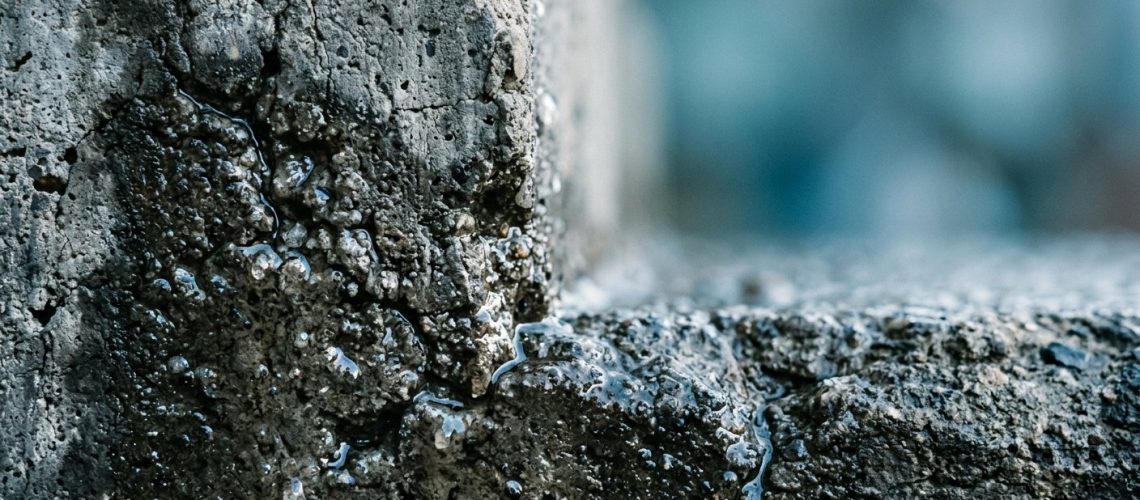
Concrete is porous by nature — its internal capillary network actively draws in water under pressure, through wicking, or simply by gravity. For commercial property managers and HOA boards in South Florida, that porosity becomes a structural liability the moment saltwater, humidity, and thermal cycling accelerate the damage. Without the right repair technology, water intrusion in concrete escalates from a nuisance into a costly, recurring problem.
- Concrete’s capillary pore system makes water intrusion almost inevitable in South Florida’s aggressive environment.
- Saltwater exposure, humidity, and thermal expansion dramatically accelerate concrete water damage in high-rises and parking structures.
- Traditional patch repairs address surface symptoms, not the underlying porosity pathway.
- Polyvinyl injection technology permanently seals intrusion points without demolition or tenant displacement.
- A licensed assessment is the essential first step — no repair method is appropriate without diagnosing the source.
The Science Behind Concrete Porosity
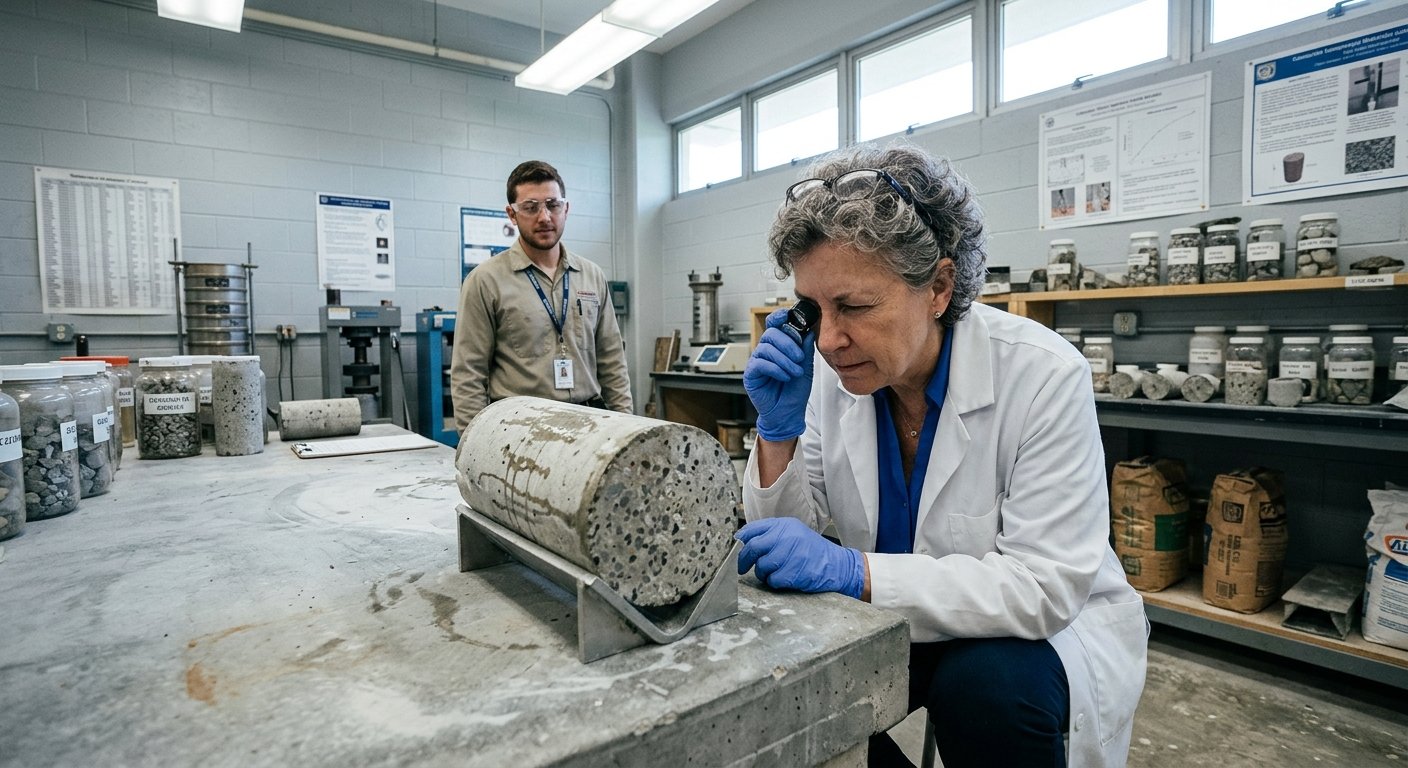
Concrete is not the solid, impermeable material it appears to be. During the hydration process, water reacts with cement particles to form calcium silicate hydrate — the binding compound that gives concrete its compressive strength. But this reaction also leaves behind a network of capillary pores, typically ranging from 10 nanometers to several micrometers in diameter, throughout the finished slab. According to research published through the Portland Cement Association, these microscopic channels remain interconnected, giving water a continuous pathway through even well-mixed concrete.
The practical implication for building owners is straightforward: concrete water penetration is not a sign of poor construction in isolation. It is a predictable consequence of the material’s chemistry. What determines how quickly that penetration becomes damaging is the environment the concrete is asked to withstand.
How Water Moves Through Concrete
Water enters concrete through three primary mechanisms:
- Capillary absorption: Unsaturated pores draw in moisture through surface tension, much like a paper towel wicks up a spill.
- Hydrostatic pressure: Water bearing against a surface — from groundwater, ponding, or hydrostatic head in parking decks — forces itself through connected pore channels.
- Vapor diffusion: In South Florida’s persistently high relative humidity, water vapor migrates through concrete from high-humidity zones to lower-humidity interior spaces.
Each mechanism compounds the others. Once water establishes a pathway, it widens it through repeated wet-dry cycling, freeze-thaw stress in upper floors of air-conditioned buildings, and chemical attack on the paste matrix.
Concrete water damage is not random — it follows the same microscopic pathways every time, and those pathways grow wider with each intrusion cycle.
South Florida’s Unique Amplifiers
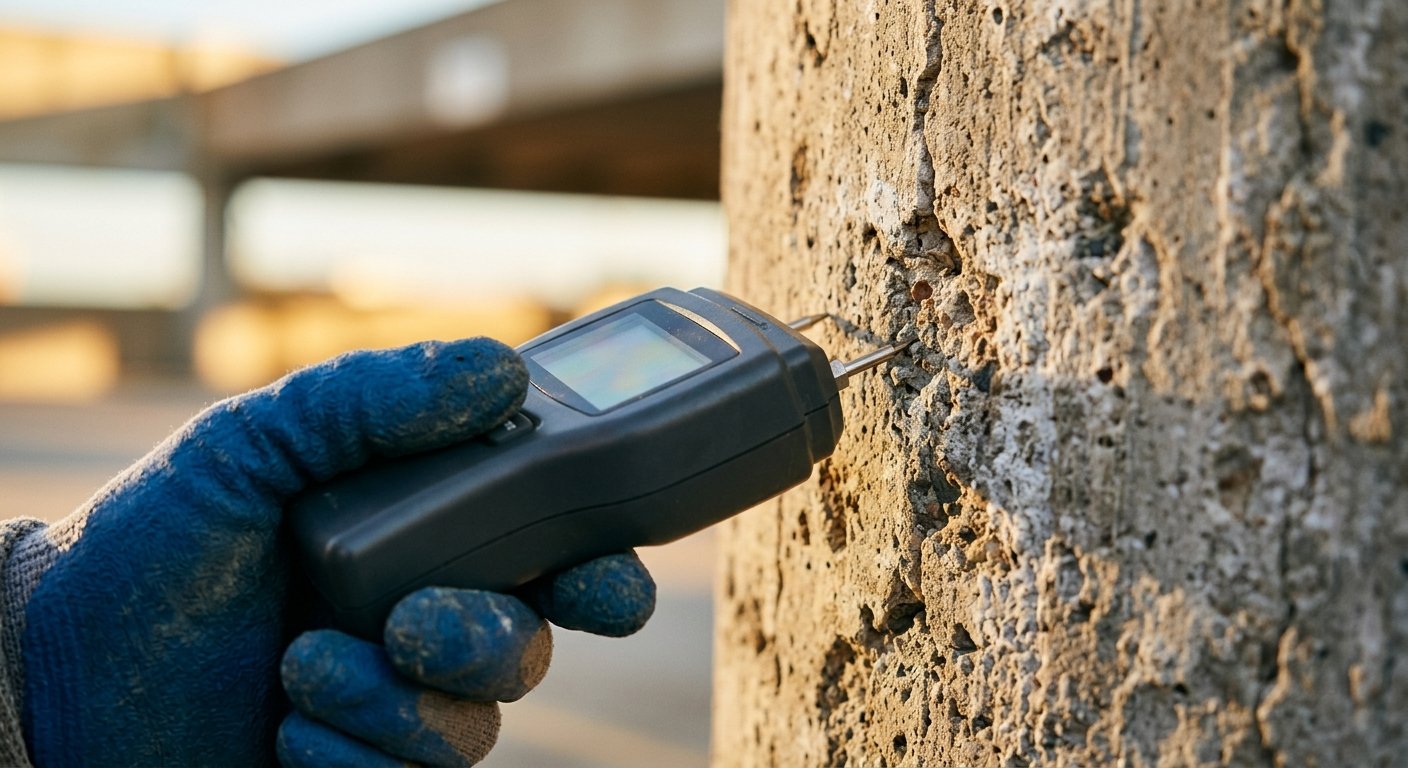
The Miami-to-West Palm Beach corridor presents concrete structures with a set of stressors that do not exist at the same intensity in most of the country. Understanding these factors helps property managers anticipate where water intrusion in concrete is most likely to originate.
Saltwater Chloride Attack
Chloride ions from ocean air and direct saltwater exposure penetrate concrete pores and initiate corrosion of embedded steel reinforcement. As rebar corrodes, it expands — exerting internal pressure that cracks surrounding concrete and creates new, larger water pathways. The Federal Highway Administration’s bridge corrosion research confirms that chloride-induced corrosion is among the most costly concrete deterioration mechanisms in coastal environments, driving maintenance expenditures that compound year over year if not addressed at the source.
Thermal Expansion in Expansion Joints
South Florida’s near-constant heat causes concrete to expand and contract daily. A concrete slab with a coefficient of thermal expansion of approximately 5.5 × 10⁻⁶ per degree Fahrenheit will experience measurable joint movement across a 200-foot parking deck even within a single afternoon. Expansion joints are designed to accommodate this movement — but sealants that are not chemically matched to the movement range degrade, crack, and lose adhesion. Once an expansion joint seal fails, it becomes the fastest and most direct water intrusion pathway in the structure. You can explore the specific repair approaches for this failure mode in detail on our concrete expansion joint repair page.
Persistent Humidity and Vapor Drive
Miami, Fort Lauderdale, and West Palm Beach average relative humidity consistently above 70% throughout the year. This sustained vapor pressure creates a near-constant outward vapor drive through ground-level slabs and inward drive through above-grade walls and roof decks, depending on interior conditioning levels. The result is that even concrete with no visible cracks can transmit moisture at rates sufficient to cause delamination, efflorescence, and interior finish damage.
Efflorescence — the white mineral deposits visible on concrete surfaces — is a reliable early indicator that water is actively moving through the slab. It should never be treated as cosmetic alone; it marks an active intrusion pathway that will worsen without targeted repair.
Why Traditional Repairs Fall Short
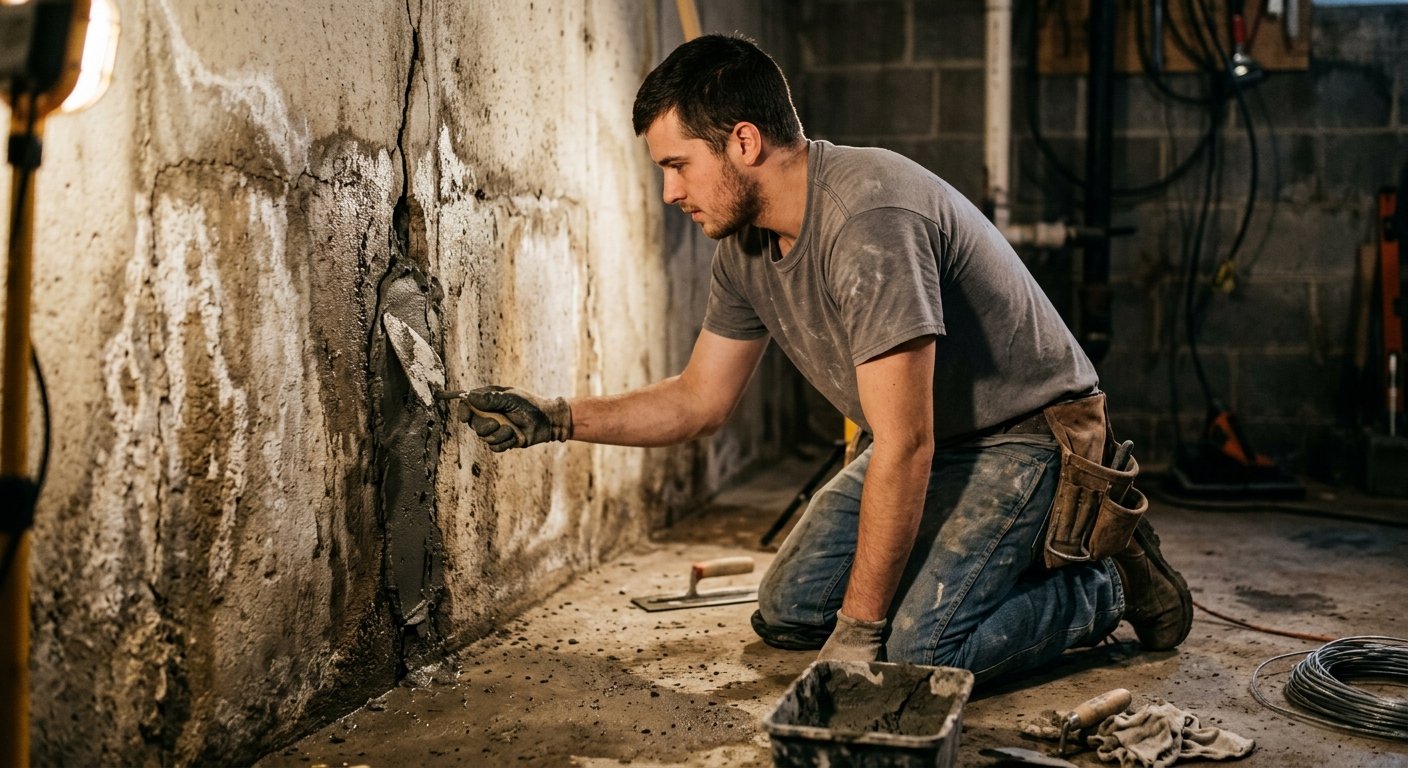
The conventional response to concrete water damage has historically involved surface-applied coatings, hydraulic cement patches, or excavation and membrane replacement. Each of these approaches shares a fundamental limitation: they treat the symptom visible at the surface without sealing the internal capillary pathway driving the problem.
| Repair Approach | What It Addresses | Limitation |
|---|---|---|
| Surface coatings | Exterior moisture barrier | Hydrostatic pressure pushes water through from below; coatings delaminate |
| Hydraulic cement patch | Visible crack or spall | Does not bond to moving joints; re-cracks with thermal cycling |
| Membrane excavation | Below-slab waterproofing layer | Requires demolition, significant cost, and extended downtime |
| Polyvinyl injection | Internal capillary and joint pathway | Requires professional assessment to confirm intrusion source |
The core problem with surface-only methods in a structure under hydrostatic pressure is physics: water under pressure will find a path around any coating that does not penetrate and seal the full depth of the intrusion channel. In parking structures and below-grade spaces common in South Florida condominiums and commercial buildings, hydrostatic conditions are the norm rather than the exception. For a comprehensive overview of water intrusion causes and permanent solutions, our water intrusion solutions page covers the full diagnostic and repair framework.
How Polyvinyl Injection Technology Works
CL Wizard’s proprietary polyvinyl injection technology takes a fundamentally different approach by delivering the sealant directly into the active intrusion pathway rather than onto the surface above it. The process begins with a licensed assessment to map the precise source and extent of water movement — because no injection technology is appropriate without first confirming where the water is actually entering.
Site Assessment
Licensed specialists identify active intrusion points, assess joint condition, and determine injection port placement locations based on observed water behavior and structural review.
Port Installation
Low-profile injection ports are installed at measured intervals along the identified pathway — typically without requiring any surface demolition or significant disruption to adjacent spaces.
Controlled Injection
Polyvinyl resin is delivered under controlled pressure, expanding to fill and chemically bond within the capillary network and joint voids from the inside outward.
Cure and Verification
The injected material cures in place, forming a flexible, hydrophilic seal that accommodates ongoing thermal movement without re-cracking. Results are verified before the crew leaves the site.
Because the repair is delivered internally, it does not depend on surface adhesion — the single largest failure point of coating and patch-based methods. The non-disruptive nature of the process means that occupied condominiums, active parking structures, and commercial buildings in Miami, Fort Lauderdale, and West Palm Beach can be repaired without relocating tenants or closing operations for extended periods. All repairs are backed by a 5-year warranty. For slab-specific applications, our concrete slab waterproofing page outlines how the technology applies to below-grade and podium deck environments specifically.
Polyvinyl-based injection resins are hydrophilic, meaning they react with and bond to water already present in the substrate. This is a significant advantage in active leak situations where conventional epoxies — which are hydrophobic — cannot achieve adhesion in wet conditions.
The Cost of Waiting
Concrete water damage is progressive. A hairline crack admitting moisture today becomes a spalled section with exposed rebar within a few seasonal cycles in South Florida’s climate. Corrosion-driven concrete failure requires far more extensive intervention — sometimes involving structural repair, not just waterproofing. The proportional relationship between early intervention and repair scope is well established in the concrete durability literature; the National Ready Mixed Concrete Association’s Concrete in Practice series documents how early-stage porosity management preserves long-term structural integrity at a fraction of the cost of deferred remediation.
For HOA boards and commercial property managers operating under fiduciary responsibility, documenting proactive assessment and licensed repair also matters for insurance positioning and reserve fund planning. A water intrusion problem that appears in a reserves study as unaddressed carries different risk weight than one with documented permanent repair and a warranty on file.
Frequently Asked Questions
Is all concrete water intrusion repairable without demolition?
Most active intrusion points in expansion joints, construction joints, and capillary pathways are addressable through injection technology without demolition. However, a licensed site assessment is required to confirm the source and appropriate method — some structural conditions require additional scope that an assessment will identify before work begins.
How long does a polyvinyl injection repair last?
CL Wizard backs all repairs with a 5-year warranty. The polyvinyl resin forms a permanent chemical bond within the substrate and is engineered to flex with thermal joint movement, which is the primary re-failure mechanism for rigid patch repairs in South Florida’s heat.
Can concrete porosity water penetration be prevented entirely in coastal buildings?
Complete prevention is not realistic in South Florida’s saltwater and high-humidity environment, but proactive assessment, targeted joint sealing, and periodic inspection can keep intrusion from progressing to structural damage. The goal is controlling the pathway, not eliminating the porosity the material inherently possesses.
How disruptive is the repair process for occupied buildings?
CL Wizard’s injection technology is specifically designed for occupied commercial and residential structures. Port installation and injection typically do not require tenant relocation, floor closures beyond the immediate work area, or extended service interruptions — making it practical for condominiums and active parking structures.
What is the first step if I suspect active water intrusion in a concrete structure?
Schedule a professional assessment. Water intrusion sources in concrete are rarely where they appear at the surface — water migrates laterally through the slab before appearing as a visible leak. A licensed specialist maps the actual pathway before any repair work is recommended.
Schedule a Professional Concrete Leak Assessment
Our licensed specialists serve Miami, Fort Lauderdale, and West Palm Beach — contact us to identify your intrusion source and review permanent repair options with no obligation.

About CL Wizard
CL Wizard provides permanent concrete leak repair solutions for South Florida commercial property managers, building owners, and HOAs using proprietary polyvinyl injection technology. Unlike traditional waterproofing methods that offer temporary fixes, CL Wizard's non-disruptive approach permanently seals concrete expansion joints and water intrusion points without requiring extensive demolition or tenant displacement. The company specializes in addressing South Florida's unique challenges including saltwater exposure, humidity, and thermal expansion in high-rises, condominiums, and parking structures. Visit clwizard.com →
