
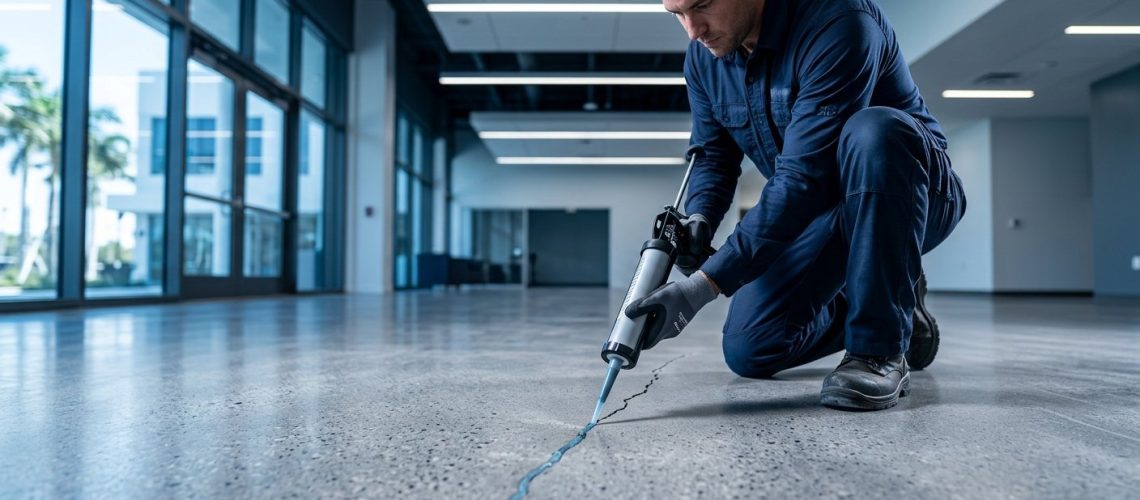
Polyvinyl injection is a permanent concrete slab leak repair method that seals active water intrusion at its source by injecting a flexible polyvinyl compound directly into cracks, voids, and expansion joints. For commercial property managers and HOA boards in South Florida, it eliminates the chronic re-treatment cycle of traditional patching—without cutting concrete, evacuating tenants, or shutting down operations.
- Polyvinyl injection addresses the root cause of water intrusion in concrete slabs, not just surface symptoms.
- South Florida’s saltwater exposure, 80–90% humidity, and thermal expansion cycles make standard repair methods fail prematurely.
- CL Wizard’s proprietary polyvinyl injection technology comes backed by a 5-year warranty and requires no demolition or tenant displacement.
- Concrete slab leaks left untreated can lead to rebar corrosion, spalling, and structural degradation that dramatically escalates repair costs.
- A professional on-site assessment is the necessary first step—remote diagnosis cannot identify the full scope of water pathways.
Why Concrete Slabs in South Florida Fail Faster
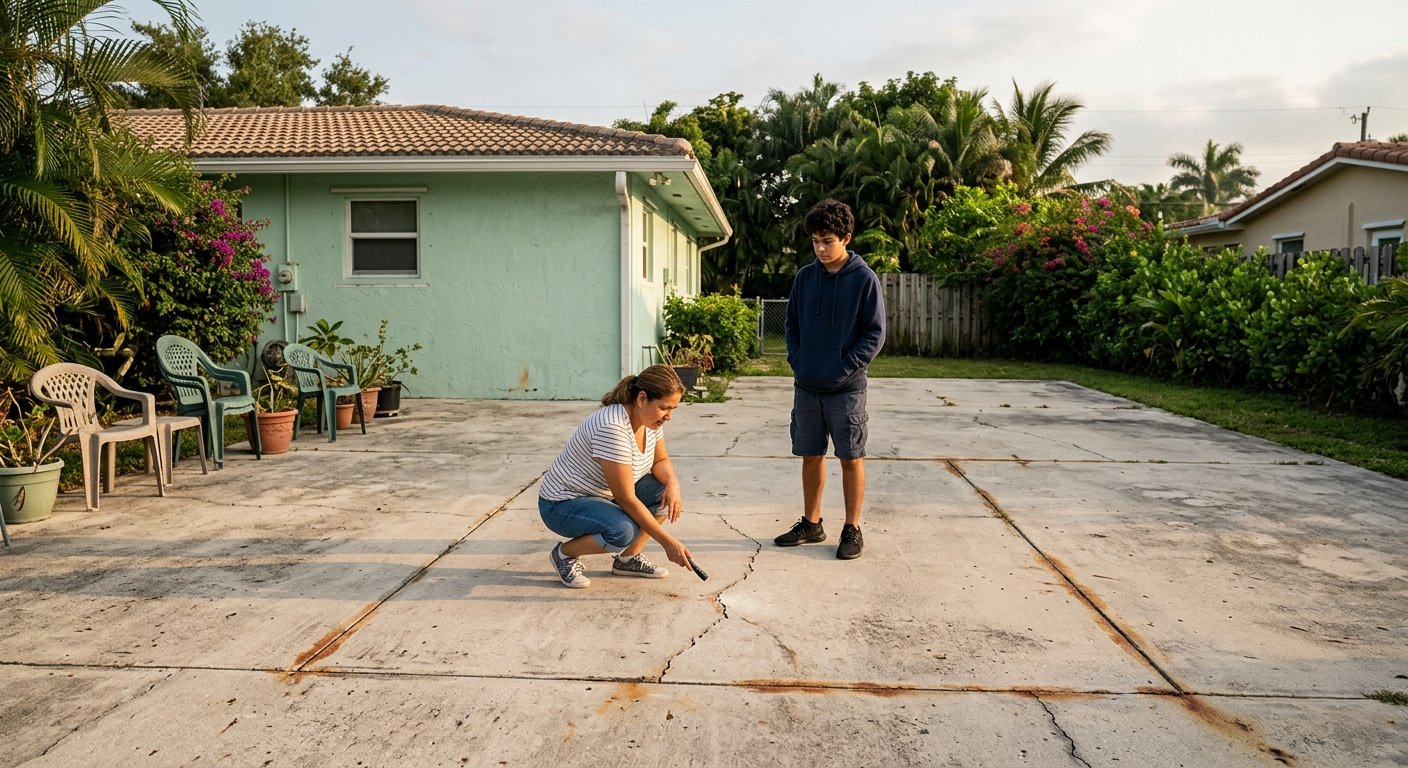
Concrete is not impermeable. Even well-poured, well-cured slabs develop pathways for water over time—and in South Florida, those pathways open faster and wider than almost anywhere else in the country. Three forces work against structural concrete here simultaneously: saltwater vapor, sustained high humidity, and aggressive thermal expansion cycles.
Miami, Fort Lauderdale, and West Palm Beach all sit in an environment where ambient humidity regularly exceeds 80 percent and where coastal salt air deposits chloride ions directly onto exposed concrete surfaces. According to the National Institute of Standards and Technology, chloride-induced corrosion of embedded rebar is the leading cause of premature concrete deterioration in coastal environments. Once chlorides penetrate a slab and reach the reinforcing steel, corrosion begins—and corroding rebar expands up to four times its original volume, cracking the concrete outward from within.
Thermal expansion compounds the problem. Concrete slabs expand and contract with temperature changes at a coefficient of approximately 10 microstrain per degree Celsius (10 × 10⁻⁶/°C). South Florida’s daily temperature swings of 15–20°F generate measurable cyclic stress across expansion joints. Over years, these joints open and close thousands of times. Rigid sealants crack. Caulk separates. And water finds its way through.
A 200-linear-foot parking deck expansion joint experiencing daily thermal movement will cycle through roughly 700 open-close events per year. No rigid patching compound maintains a waterproof seal under that kind of continuous mechanical stress—only a flexible, bonded solution can keep pace.
What Traditional Repair Methods Miss
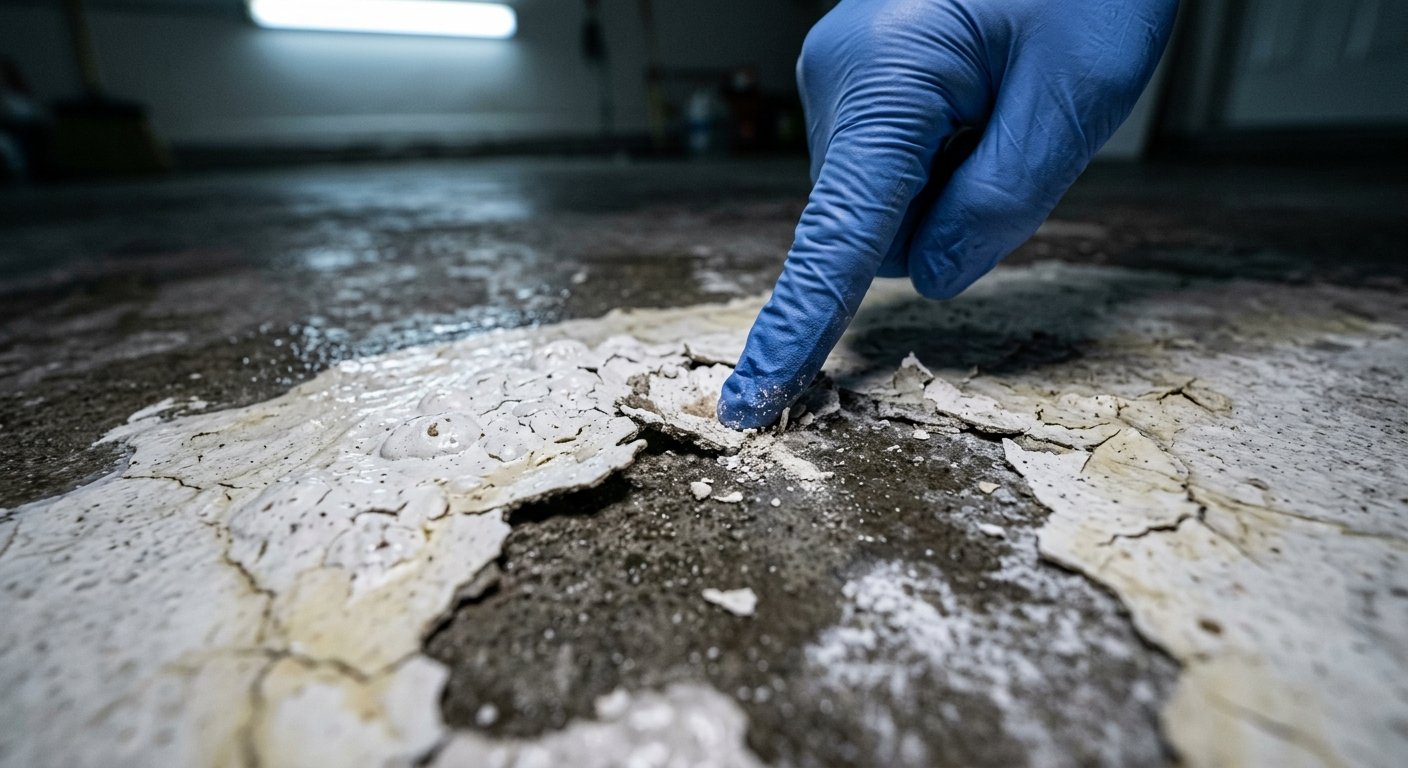
Property managers dealing with recurring concrete slab leaks have typically been through a familiar cycle: surface-applied sealants, epoxy injections, or polyurethane foam treatments that work for a season—then fail. Understanding why these approaches fall short helps clarify what a permanent solution actually requires.
Surface coatings address the outermost layer of the slab but cannot penetrate the internal void networks where water actually travels. Epoxy injection creates a rigid bond that does not accommodate thermal movement; in a South Florida expansion joint, this means the repair itself becomes the next crack point. Polyurethane foam swells on contact with water and can temporarily stop active leaks, but it remains compressible and does not bond durably to wet concrete surfaces over time.
| Repair Approach | Traditional Patching / Coatings | Polyvinyl Injection (CL Wizard) |
|---|---|---|
| Addresses water pathway internally | No — surface only | Yes — injected at source |
| Accommodates thermal movement | No — rigid bond cracks | Yes — flexible polyvinyl compound |
| Effective on active (wet) leaks | Limited | Yes |
| Requires demolition or cutting | Sometimes | No |
| Tenant/operation disruption | High | Minimal |
| Warranty | Typically none or 1 year | 5-year warranty |
How Advanced Polyvinyl Injection Actually Works
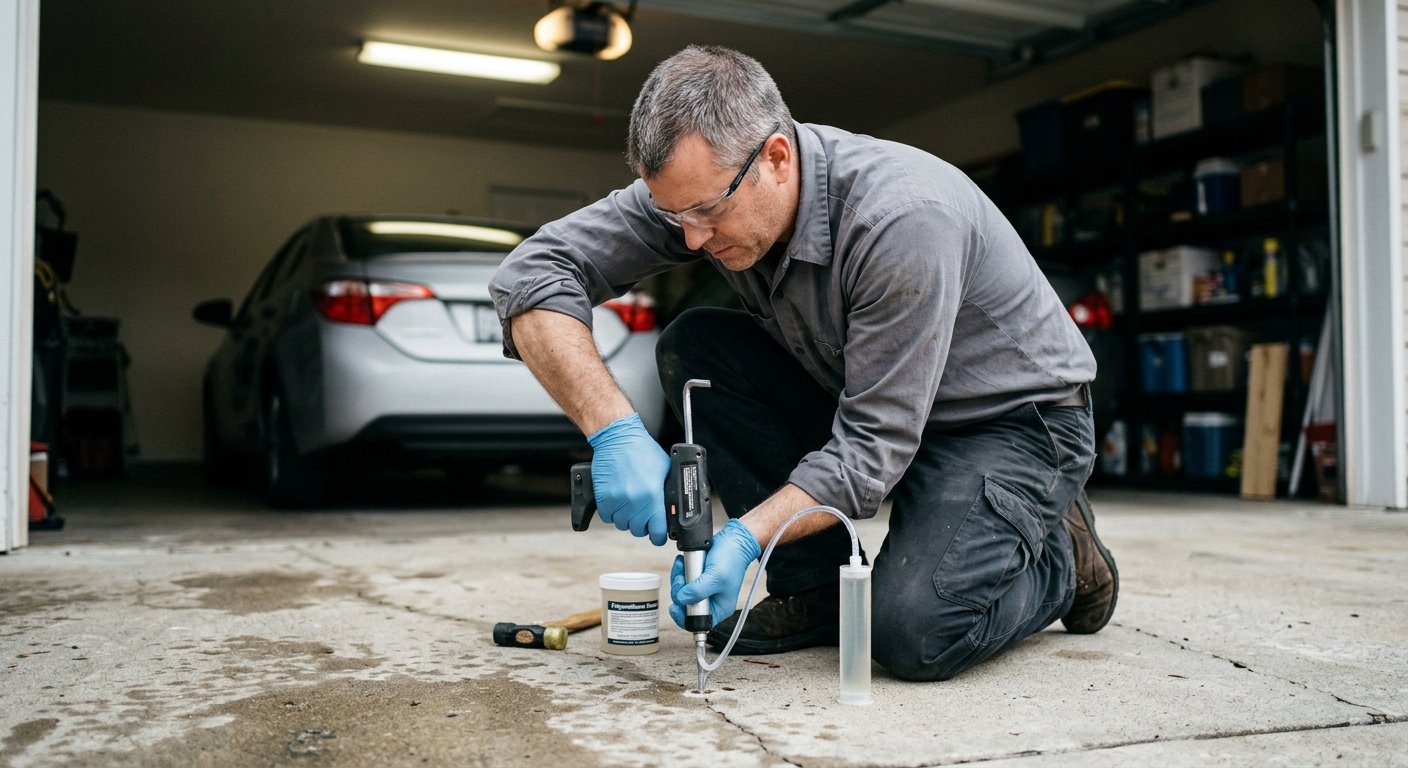
CL Wizard’s proprietary polyvinyl injection technology was developed specifically to address the failure modes that defeat conventional concrete slab leak repair. The process begins with a thorough on-site assessment to map active water intrusion points, trace moisture pathways through the slab, and identify compromised expansion joints. No two slabs fail identically, and accurate diagnosis determines which injection points will deliver permanent results.
Once intrusion points are identified, small-diameter ports are installed at precise intervals along the leak pathway—typically every 6 to 12 inches depending on slab thickness and crack geometry. The polyvinyl compound is then injected under controlled pressure, flowing through the internal void network and bonding to the concrete matrix from within. Unlike rigid epoxies, the cured polyvinyl material remains flexible, allowing it to move with the slab through thermal expansion and contraction cycles without fracturing.
On-Site Assessment
A licensed specialist evaluates the slab, maps moisture pathways, and identifies all active intrusion points. Remote diagnosis cannot substitute for this step.
Port Installation
Small injection ports are placed at measured intervals along cracks, voids, and expansion joints—no concrete cutting or demolition required.
Controlled Injection
Polyvinyl compound is injected under calibrated pressure, flowing through the internal void network and displacing trapped water as it travels.
Bonding and Cure
The compound bonds to the concrete matrix and cures into a flexible, waterproof seal that accommodates ongoing thermal movement.
Post-Injection Verification
The treated areas are inspected and verified before the team clears the site—repairs are confirmed, not assumed.
The result is a sealed slab that addresses water intrusion at the source. Because no jackhammering, trenching, or slab removal is involved, commercial tenants remain undisturbed and parking structures stay operational throughout the repair. Learn more about how this technology applies to expansion joints specifically on the concrete expansion joint leak repair service page.
Permanent concrete slab repair is not about sealing the surface—it’s about filling the internal pathways that surface treatments will never reach.
What’s at Risk When Slab Leaks Go Untreated
The cost calculus of delaying concrete slab leak repair is rarely in the property owner’s favor. Water intrusion that begins as a hairline crack or a weeping expansion joint becomes a cascading problem once chlorides reach embedded rebar. Rebar corrosion is self-accelerating: as steel expands, it widens the crack, which allows more saltwater vapor to penetrate, which accelerates corrosion further.
For high-rise condominiums and parking structures in Miami-Dade, Broward, and Palm Beach counties, the regulatory dimension adds another layer of urgency. Following the 2021 Surfside collapse, Florida Senate Bill 4D established new mandatory structural inspection and milestone reporting requirements for condominium buildings three stories or taller. Documented water intrusion in concrete elements is a condition inspectors and engineers will flag—and deferred maintenance on known leaks creates both liability exposure and potential violations.
The water intrusion concrete solutions page details the full spectrum of damage pathways that untreated slab leaks initiate, from spalling and delamination to the long-term compromise of structural integrity.
The American Concrete Institute estimates that corrosion-related concrete repair costs in the U.S. run into the billions annually—a significant portion of which is attributed to inadequate early intervention. Addressing a leak when it’s a 12-inch crack costs a fraction of what structural rehabilitation costs after rebar failure.
Frequently Asked Questions
How is polyvinyl injection different from standard epoxy or polyurethane injection?
Epoxy injection creates a rigid bond that cannot flex with thermal expansion cycles, making it prone to re-cracking in South Florida’s temperature environment. Polyurethane foam swells on contact with moisture but doesn’t bond durably to wet concrete over time. CL Wizard’s polyvinyl compound bonds to the internal concrete matrix and remains flexible after curing, accommodating the ongoing thermal movement that defeats rigid repair materials.
Will repairs require shutting down my parking structure or displacing tenants?
No. CL Wizard’s non-disruptive repair process does not require concrete cutting, jackhammering, or demolition. Injection ports are small and installed at measured intervals. Commercial parking structures, lobbies, and occupied units above the repair zone remain operational throughout the process, which is one of the primary advantages of this approach for commercial property managers and HOA boards.
Does saltwater exposure affect how long polyvinyl injection repairs last?
The polyvinyl compound is specifically resistant to the chloride-rich environment common in South Florida coastal properties. Unlike reactive foam materials, it does not degrade when exposed to saltwater vapor or high humidity. The 5-year warranty on all CL Wizard repairs reflects confidence in the technology’s durability under South Florida’s specific conditions.
Is an on-site inspection really necessary before a repair quote?
Yes, always. Water intrusion in concrete slabs rarely follows a single, obvious pathway. Moisture can travel significant distances from the visible leak point through internal voids and crack networks. Accurate diagnosis of all active pathways is what separates a permanent repair from one that fails within a season. No responsible contractor can scope or price a concrete slab leak repair without physically inspecting the structure.
Which types of buildings and structures does CL Wizard serve?
CL Wizard specializes in commercial concrete structures throughout Miami, Fort Lauderdale, and West Palm Beach—including high-rise condominiums, HOA common areas, commercial parking garages, and multi-story commercial buildings. The proprietary polyvinyl injection process is particularly well-suited to expansion joint failures and water intrusion points in these structure types. Each project begins with a site assessment to confirm scope and suitability.
The Right Next Step for Your Property
Concrete slab leak repair in South Florida is not a problem that stabilizes on its own. Saltwater vapor, humidity, and thermal expansion continue working against untreated cracks every day. The properties that control long-term maintenance costs are the ones that intervene with permanent solutions early—before chloride-driven rebar corrosion turns a sealable leak into a structural rehabilitation project.
CL Wizard’s licensed and insured team serves commercial property managers, HOA boards, and building owners across Miami, Fort Lauderdale, and West Palm Beach. Every repair uses proprietary polyvinyl injection technology and is backed by a 5-year warranty. The first step is always a professional on-site assessment—there’s no substitute for an expert eye on your specific structure. Explore the full scope of our proprietary concrete leak repair method before you schedule.
Schedule Your On-Site Assessment
A CL Wizard specialist will evaluate your concrete slab, identify all active water intrusion points, and outline a permanent repair approach—no guesswork, no remote estimates.

About CL Wizard
CL Wizard provides permanent concrete leak repair solutions for South Florida commercial property managers, building owners, and HOAs using proprietary polyvinyl injection technology. Unlike traditional waterproofing methods that offer temporary fixes, CL Wizard's non-disruptive approach permanently seals concrete expansion joints and water intrusion points without requiring extensive demolition or tenant displacement. The company specializes in addressing South Florida's unique challenges including saltwater exposure, humidity, and thermal expansion in high-rises, condominiums, and parking structures. Visit clwizard.com →
