
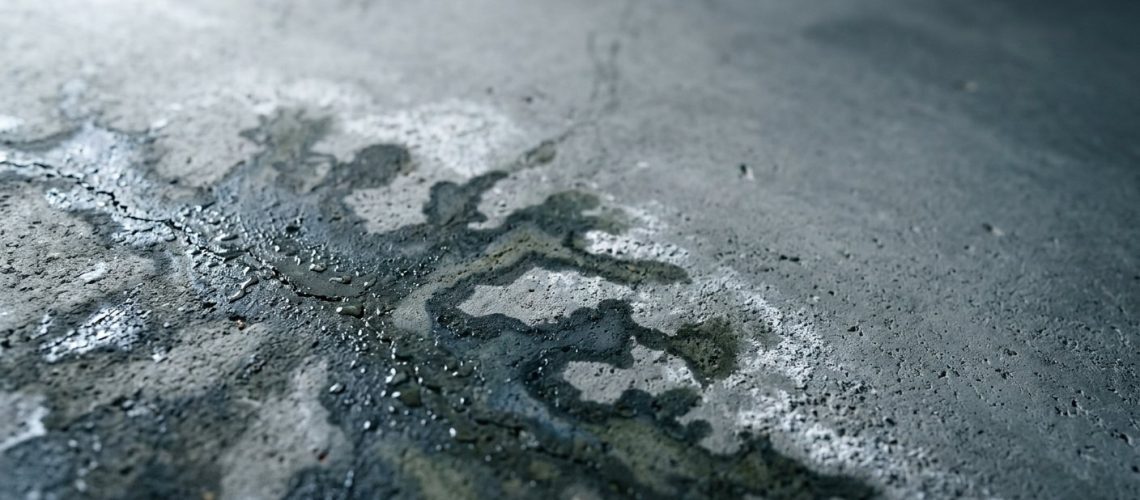
Water seeping through concrete isn’t a minor maintenance nuisance — it’s a progressive structural threat. In South Florida’s commercial and high-rise buildings, unchecked water intrusion in concrete can escalate from a damp stain to spalling surfaces, corroded rebar, and costly structural remediation within a surprisingly short window. According to the Federal Highway Administration, water infiltration is one of the leading causes of concrete deterioration in structures across the United States.
If you manage a condominium, parking garage, or commercial building in Miami, Fort Lauderdale, or West Palm Beach, this guide walks you through exactly why water seepage through concrete happens, how to detect it accurately, and what permanent repair options exist in 2026.
Why Concrete Leaks: The South Florida Factor
Concrete is strong in compression but inherently porous. Its internal capillary network — microscopic channels formed during the curing process — can absorb and transmit water under pressure. In most climates, this porosity is a manageable consideration. In South Florida, it becomes a compounding problem.
Three environmental forces accelerate concrete water damage in this region:
- Saltwater exposure: Chloride ions from sea air and direct saltwater contact penetrate concrete pores, initiating corrosion in the embedded steel reinforcement. Once rebar corrodes, it expands at roughly 2–4 times its original volume, fracturing concrete from within.
- Thermal expansion and contraction: South Florida’s daily temperature cycling causes concrete to expand and contract. Concrete has a thermal expansion coefficient of approximately 9.9 × 10⁻⁶ per °C. In a 200-foot parking structure, that translates to measurable joint movement across every expansion joint — movement that opens pathways for water intrusion.
- Humidity and hydrostatic pressure: Annual rainfall exceeding 60 inches, combined with coastal humidity regularly above 80%, keeps concrete moisture problems elevated year-round. Hydrostatic pressure from standing water on parking decks and rooftop slabs drives moisture through even hairline cracks.
Together, these conditions make concrete moisture problems in South Florida more aggressive than nearly anywhere else in the continental U.S.
Common Entry Points for Water Seepage
Understanding where water enters helps you prioritize repair. In commercial concrete structures, seepage typically originates from:
Expansion Joints
These engineered gaps allow structural movement but require flexible sealants to prevent water infiltration. Traditional joint sealants degrade under UV exposure and repeated thermal cycling, typically within 5–7 years. Once compromised, expansion joints become direct conduits for water into lower levels. Learn more about how these failures develop in our detailed overview of concrete expansion joint leak repair.
Concrete Cracks and Cold Joints
Cracks as narrow as 0.1 mm can allow water penetration under sufficient hydrostatic pressure. Cold joints — the interfaces where separate concrete pours meet — are structurally weaker zones that frequently develop seepage over time in aging South Florida structures.
Slab Penetrations and Tie-Holes
Post-construction penetrations for conduit, piping, and fasteners create micro-gaps. Formwork tie-holes, if not properly grouted, act as point-source leaks that worsen with hydrostatic cycling.
Concrete Slab Surfaces
Surface carbonation and scaling — accelerated by South Florida’s chemistry — can degrade the protective paste layer, increasing surface permeability over decades. For a comprehensive look at slab-level vulnerabilities, our guide on waterproofing concrete slabs covers the full picture.
Detecting Concrete Leaks Accurately
Effective concrete leak detection requires more than identifying a wet spot. By the time moisture is visible on a surface, water may have been traveling through the structure for weeks or months. Professional concrete leak detection in commercial buildings typically involves:
- Infrared thermography: Identifies temperature differentials caused by moisture trapped behind concrete surfaces, revealing hidden seepage pathways not visible to the naked eye.
- Moisture meter readings: Quantifies moisture content at specific depths, establishing baseline data for tracking repair effectiveness.
- Visual mapping: Systematic documentation of crack patterns, efflorescence deposits (white calcium residue), staining, and spalling to identify seepage origin points.
- Water flow tracing: In complex multi-level structures, water often migrates laterally before appearing as a visible leak. Tracing the actual water path prevents misdiagnosis and failed repairs.
A thorough on-site assessment is essential — water intrusion issues cannot be accurately diagnosed remotely. Each structure has unique variables affecting both the seepage pathway and the most appropriate repair method.
Why Traditional Repair Methods Fall Short
Property managers in South Florida are familiar with the cycle: a crew applies hydraulic cement or epoxy injection to a leaking joint, the repair holds for a season or two, and water finds a new path through the next weakest point. This pattern isn’t a maintenance failure — it’s an inherent limitation of rigid repair materials applied to structures that continue to move.
Hydraulic cement plugs voids but has no flexibility. When thermal cycling re-opens a joint by even 0.5 mm, a rigid patch fractures. Exterior membrane applications can be effective but require full surface access, often demanding significant disruption to parking operations or occupied spaces — and they still depend on proper surface preparation and drainage design to function long-term.
The fundamental challenge with concrete moisture problems in dynamic structures is that any repair material must accommodate ongoing movement. That’s the core engineering problem that traditional methods don’t solve.
Polyvinyl Injection: How Permanent Repair Works
CL Wizard’s proprietary polyvinyl injection technology was developed specifically to address this limitation. Rather than filling voids with rigid material, polyvinyl injection delivers a flexible, hydrophilic compound directly into the leak pathway under controlled pressure.
Here’s how the process works in practice:
- Port installation: Low-profile injection ports are installed at measured intervals along the crack, joint, or identified seepage zone — typically every 8 to 12 inches depending on crack geometry.
- Controlled injection: The polyvinyl compound is injected under calibrated pressure, filling the void network from the deepest point outward. The material is designed to react with residual moisture, expanding to fill irregular void geometry.
- Flexible cure: Unlike epoxy, the cured compound retains elasticity — accommodating thermal expansion and contraction without fracturing. This flexibility is what makes the repair durable in South Florida’s thermal cycling environment.
- Surface finishing: Port holes are sealed and the surface is restored, leaving no visible evidence of the repair process.
The entire process is performed from the interior of the structure in most applications, eliminating the need for exterior excavation, demolition, or significant operational disruption. Tenants remain in place. Parking structures stay operational. This non-disruptive repair technology is particularly significant for high-rise condominiums and occupied commercial buildings where traditional methods would require extensive coordination and tenant notification.
All repairs by CL Wizard carry a 5-year warranty — reflecting the confidence behind a method engineered for permanence rather than temporary relief. For a broader overview of water intrusion solutions and when each approach is appropriate, visit our water intrusion solutions page.
The Cost of Delayed Action
The National Institute of Standards and Technology has documented that corrosion-related concrete deterioration costs building owners significantly more to repair when intervention is delayed — with costs escalating exponentially once rebar corrosion reaches the active stage.
In South Florida’s chloride-rich environment, the corrosion timeline is compressed. A seeping expansion joint that might be repaired efficiently today can, within 18–24 months, require spall repair, rebar treatment, and patch restoration at several times the original repair cost — with added liability exposure if the deterioration affects structural capacity.
Concrete slab leak repair addressed early is a targeted investment. The same problem addressed after structural degradation has set in becomes a project-level expense.
Frequently Asked Questions
How do I know if water seepage through concrete is a structural emergency?
Active water flow, visible concrete spalling, rust staining from rebar, or deflection in slab surfaces warrant immediate professional assessment. Slow seepage without visible concrete damage is serious but typically allows time for a scheduled evaluation. When in doubt, have a licensed specialist inspect the affected area rather than waiting for visible deterioration to worsen.
Can polyvinyl injection repair work on all concrete structures?
Polyvinyl injection is highly effective for expansion joints, cracks, cold joints, and penetration seals in concrete structures. The appropriate application depends on the specific leak source, concrete condition, and structural configuration — which is why a professional on-site assessment is the starting point for any recommended repair plan.
How long does polyvinyl injection repair take?
Most commercial repair projects are completed within one to two days per work zone, depending on the extent of the affected area. Unlike membrane systems or excavation-based methods, the process doesn’t require curing wait times that suspend building operations.
Will the repair require tenants or parking users to vacate?
In the majority of applications, CL Wizard’s non-disruptive repair approach allows structures to remain fully operational during repair. Specific areas may require temporary restricted access during active injection — typically a matter of hours per section, not days.
Is commercial building waterproofing different from residential concrete repair?
Commercial structures in South Florida face higher complexity: greater hydrostatic loads, more expansion joints, higher occupancy liability, and stricter building code compliance requirements. Solutions appropriate for residential slabs may not address the dynamic movement and sustained pressure loads characteristic of high-rises, parking decks, and multi-tenant commercial buildings.
Schedule Your On-Site Assessment
If your Miami, Fort Lauderdale, or West Palm Beach property is showing signs of water seepage through concrete — whether it’s wet expansion joints, dripping parking ceilings, or moisture staining on slab surfaces — the most important next step is an accurate diagnosis from a licensed specialist.
CL Wizard provides on-site concrete leak detection and assessment for commercial properties, condominiums, and HOA-managed structures throughout South Florida. Our licensed and insured team will evaluate the seepage source, explain the repair pathway in plain language, and provide a clear scope of work — no guesswork, no generic solutions.
Contact CL Wizard today to schedule your assessment and stop water intrusion before it becomes a structural problem.
