
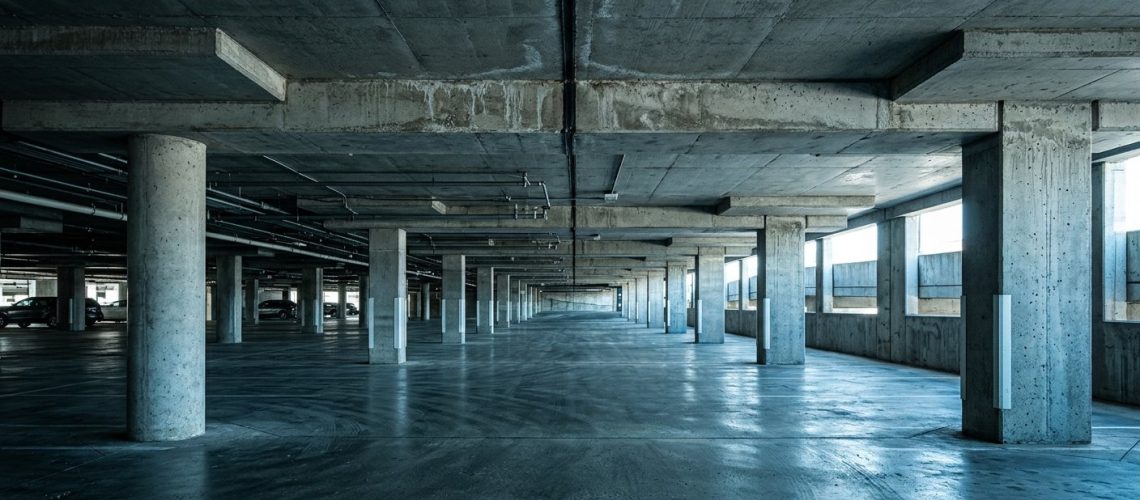
Parking garage slab leaks occur when water penetrates concrete through expansion joints, cracks, and honeycombed voids — accelerated in South Florida by saltwater exposure, humidity, and thermal cycling. Understanding what’s actually driving water intrusion is the first step toward choosing a repair method that lasts, rather than one that fails again within months.
- Concrete expansion joints are the primary entry point for water in most South Florida parking structures.
- Saltwater chloride, UV radiation, and thermal expansion combine to degrade traditional sealants far faster than in inland environments.
- Polyvinyl injection technology seals leaks from the inside out, addressing the source rather than the surface.
- Early intervention prevents compounding damage to rebar, post-tension cables, and lower-level finishes.
- Non-disruptive repair methods can be completed without displacing tenants or closing parking levels.
Why Parking Garage Slabs Leak in the First Place
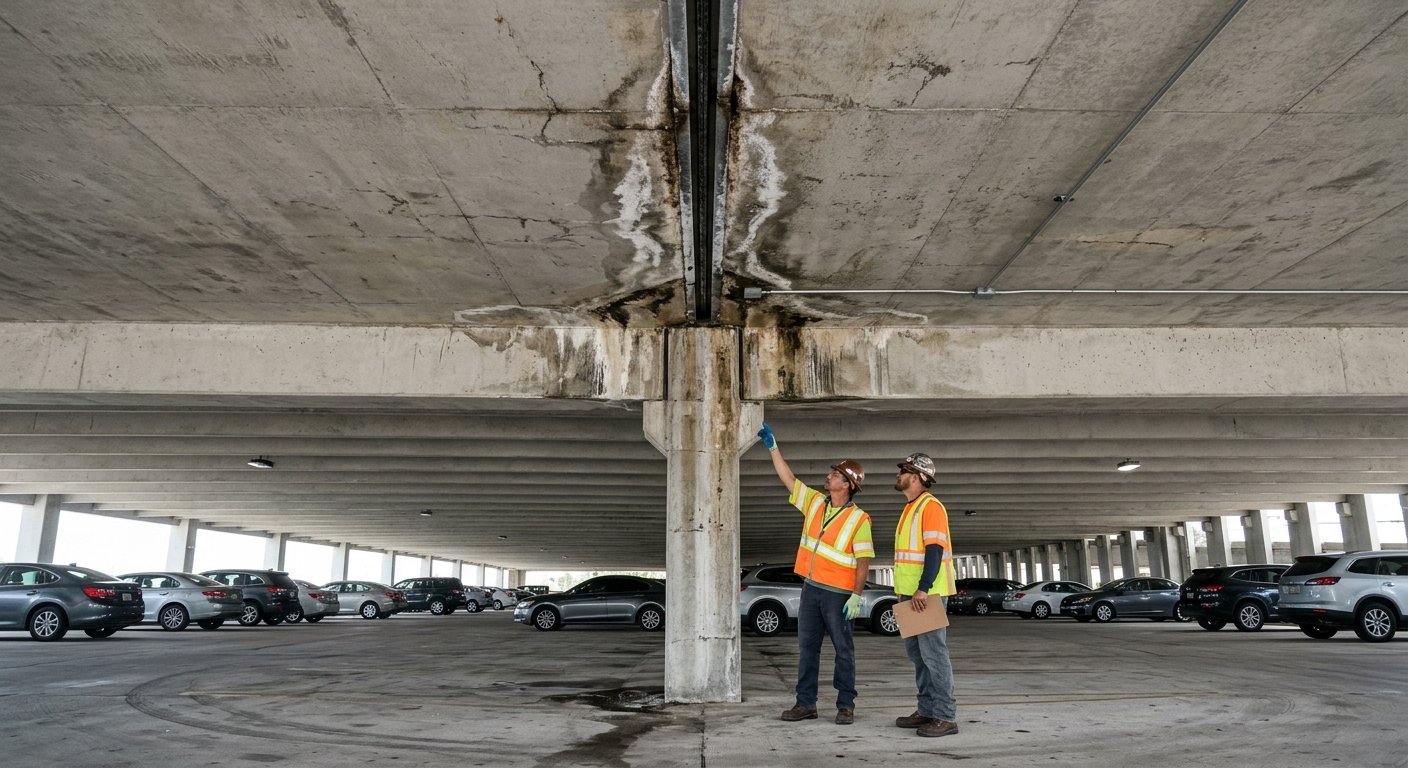
Concrete is not waterproof. It is a porous material with capillaries throughout its matrix, and under hydrostatic pressure — or even the pressure of standing water — moisture will find a path through. In parking garages, that path is almost always assisted by a structural feature: the expansion joint.
Expansion joints are intentional gaps built into concrete slabs to accommodate movement caused by thermal expansion and contraction. According to the American Concrete Institute, concrete expands and contracts with temperature at approximately 5.5 millionths of an inch per inch per degree Fahrenheit. In South Florida, where surface temperatures on exposed concrete can swing 60°F or more between a winter night and a summer afternoon, those movements are significant. Over time, any material placed inside or over that joint — silicone, urethane, backer rod — is repeatedly compressed and stretched until it debonds, tears, or hardens.
Once the joint seal fails, water enters. It pools on the slab, seeps into the joint, travels along rebar, and eventually emerges as a visible drip or stain on the ceiling of the level below. By that point, the water has already been in contact with the structural elements for some time.
Saltwater aerosols carried inland from Biscayne Bay, the Atlantic, and the Intracoastal accelerate chloride penetration into concrete. Once chlorides reach the rebar depth, they initiate corrosion, which expands the steel and cracks the surrounding concrete from within. This cycle — water intrusion, corrosion, cracking, more water intrusion — is the defining damage pattern in coastal parking structures from Miami to West Palm Beach.
The Structural Factors Behind Water Intrusion
Thermal Expansion and Joint Movement
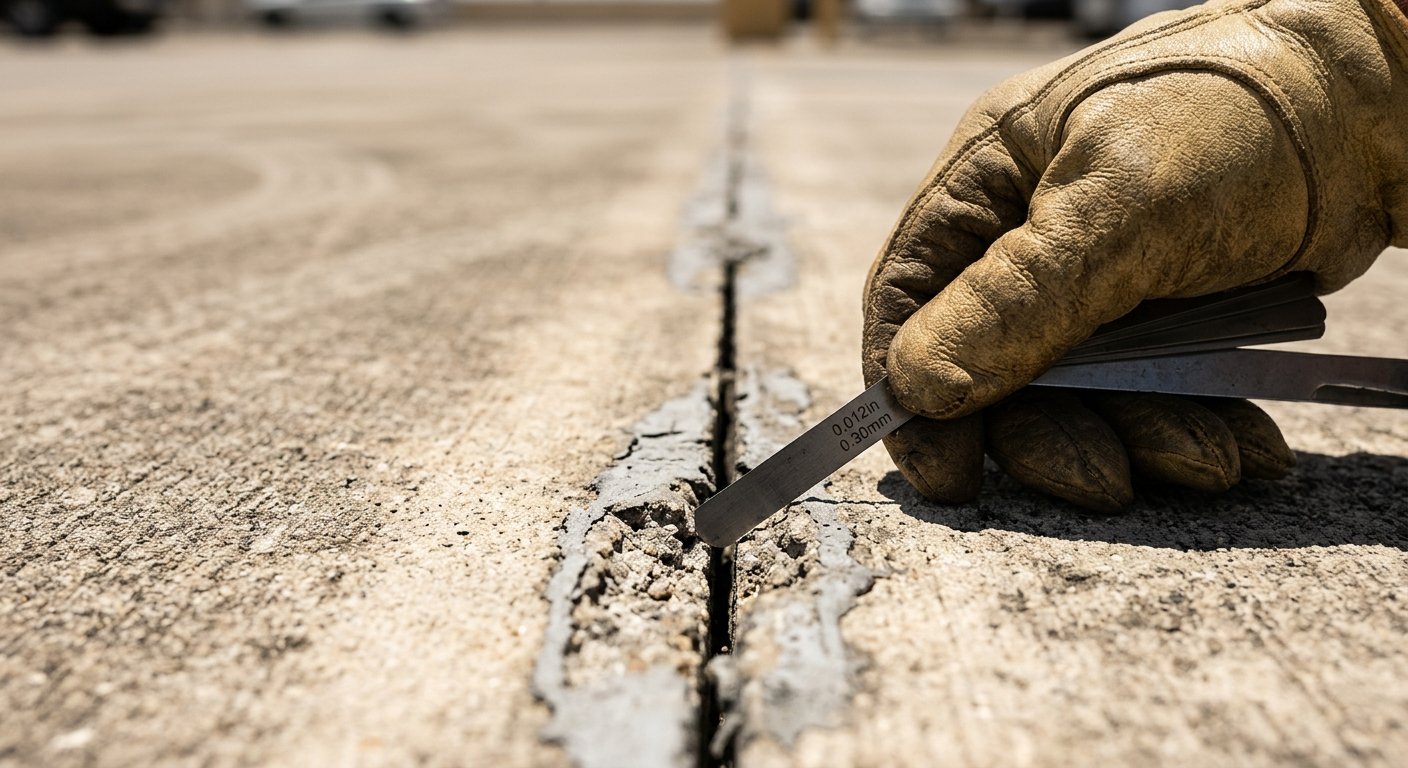
In a multi-level parking structure, the uppermost exposed deck bears the greatest thermal load. Slabs can reach surface temperatures above 140°F on summer afternoons, then cool significantly overnight. This daily movement accumulates stress at every joint. When the joint sealant fails to flex with the concrete, a gap opens. Even a gap of 1–2 millimeters is sufficient to allow meaningful water infiltration under rain or wash-down conditions.
For a deeper look at how these forces interact with concrete waterproofing systems, the South Florida water intrusion guide breaks down the regional mechanisms in practical terms for property managers.
Post-Tension Cable Pockets and Construction Joints
Modern parking structures in South Florida commonly use post-tensioned concrete slabs. The tendons run through sleeves, and the anchor pockets at the slab edge — once grouted after tensioning — can become water entry points if the grout shrinks, cracks, or was improperly filled during construction. Construction joints between pours are another vulnerability. Unlike expansion joints, which are designed to move, construction joints are intended to bond permanently. When they don’t, the result is a crack path that can extend the full depth of the slab.
Honeycombing and Aggregate Voids
Poor consolidation during the original concrete pour creates honeycombed zones — areas where coarse aggregate has clustered without sufficient cement paste to bind them. These voids are invisible from the surface but form interconnected channels that water can travel through under surprisingly low pressure. In a parking garage environment, where power washing and drainage loads create brief but significant hydrostatic events, honeycombed sections can transmit water to the level below within minutes of a rain event.
Many property managers address visible drips with surface coatings or traffic-deck membranes applied from above. These can delay the symptom but do not address the joint or crack that is already admitting water. Over one or two rainy seasons, the entrapped moisture continues to corrode rebar and deteriorate the concrete matrix — often making the eventual repair significantly more involved than early intervention would have been.
Why Traditional Repair Methods Fall Short
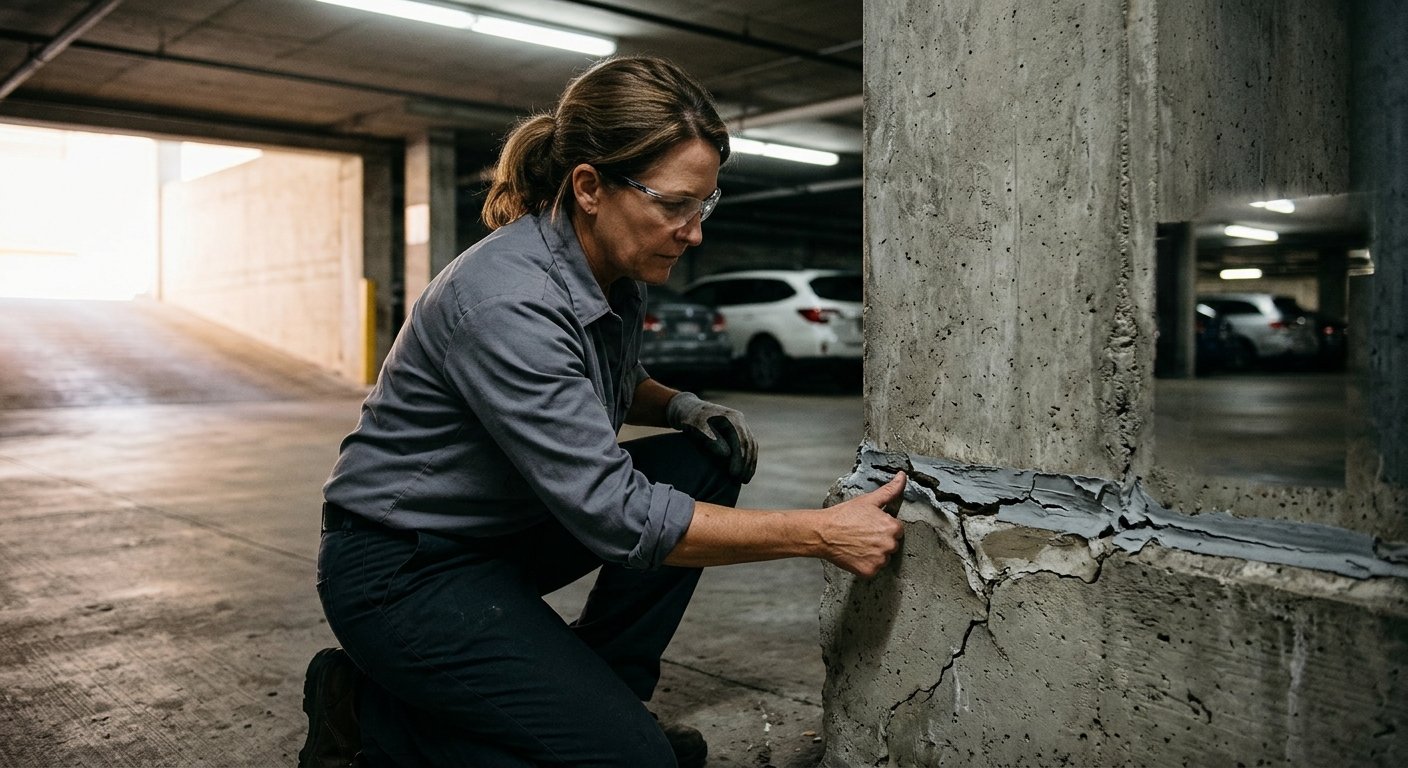
Silicone caulks, urethane sealants, and cement-based patching compounds have been the default tools for parking garage leak repair for decades. Each has a role in the right context, but none is well-suited to a joint or crack that continues to move.
| Repair Approach | Traditional Sealants | Polyvinyl Injection |
|---|---|---|
| Addresses joint movement | Partially — degrades under repeated flex | Yes — flexible cure accommodates movement |
| Penetrates to water source | No — surface application only | Yes — injected into the void or joint |
| Saltwater / UV resistance | Low to moderate | High — inert polymer compound |
| Tenant disruption | Low initially, but frequent reapplication | Minimal — targeted, non-demolition process |
| Warranty | Typically none or 1 year | 5-year warranty (CL Wizard) |
The core limitation of surface-applied sealants is location: they sit on top of the problem. When a joint moves, the bond between sealant and concrete substrate is the weakest point in the system. In South Florida’s thermal environment, that bond is stressed repeatedly. Most urethane products begin to harden and lose elasticity within two to three years of UV exposure, regardless of their initial performance.
For a current look at how repair material technology has evolved, this overview of concrete leak technology in 2026 covers what the market now offers beyond legacy sealant systems.
How Polyvinyl Injection Works
CL Wizard’s proprietary polyvinyl injection approach addresses water intrusion from inside the concrete matrix rather than from the surface. The process involves drilling small-diameter ports at calculated intervals along the affected joint or crack, then injecting a polyvinyl compound under controlled pressure. The material travels through the void space, displaces residual moisture, and cures in place — creating a flexible, chemically inert seal that moves with the concrete rather than against it.
The material travels through the void space, displaces residual moisture, and cures in place — moving with the concrete rather than against it.
Because the process is injection-based, it does not require jackhammering, saw-cutting, or membrane removal. A parking level can typically remain operational during the repair process. This is a meaningful operational consideration for condominium associations and commercial property managers in Miami, Fort Lauderdale, and West Palm Beach, where parking is a critical amenity and resident relations matter.
The guide to concrete repair products that actually work in 2026 provides additional context on how injection-based materials compare to surface-applied options across performance dimensions.
Assessment
A licensed specialist inspects the affected slab, traces water pathways, and identifies whether the source is an expansion joint, construction joint, crack, or void pocket. No on-site assessment, no diagnosis.
Port placement
Small-diameter ports are drilled at measured intervals along the intrusion path. Port spacing is calculated based on joint width, slab thickness, and observed leak behavior.
Injection
Polyvinyl compound is injected under controlled pressure, traveling through voids and joint gaps to fill the water pathway from the inside out.
Cure and verification
The compound cures in place, bonding to the concrete matrix. The repair is tested and documented before the crew leaves the site.
What Property Managers Should Do Now
The most common mistake in managing parking garage leaks is waiting for the problem to become undeniable before acting. Staining on the soffit is already a late indicator. By the time a visible drip or efflorescence appears, chloride ions have typically been migrating through the slab for a season or more. According to the Federal Highway Administration’s corrosion guidelines, chloride-induced rebar corrosion in concrete is one of the leading causes of premature structural deterioration in coastal infrastructure — and it is largely preventable with early intervention.
For HOA boards, the calculus is straightforward: the cost of proactive concrete slab leak repair is consistently lower than the cost of remediating corroded rebar, replacing post-tension anchors, or refinishing damaged commercial spaces below the affected slab. While specific figures vary by project scope and require on-site assessment, the principle of early intervention reducing total cost of ownership is well established in structural maintenance.
Frequently Asked Questions
How do I know if my parking garage has an expansion joint leak versus a slab crack?
Expansion joint leaks typically appear as linear water stains directly below a joint line and tend to worsen after rain or wash-down. Slab cracks can appear anywhere and often follow the path of rebar or post-tension tendons. A professional assessment is the only reliable way to trace the water pathway and determine the correct repair approach.
Will the repair require closing the parking garage?
CL Wizard’s non-disruptive injection process is designed to work without closing parking levels in most situations. Because the process uses small-diameter ports rather than demolition equipment, it can be staged around occupied areas. The specific scheduling depends on the location and extent of the repair, which is confirmed during the assessment.
How long does the repair last?
CL Wizard backs all repairs with a 5-year warranty. The polyvinyl compound is chemically inert and designed to flex with joint movement rather than debond under thermal stress, which is the primary failure mode of traditional sealants in South Florida conditions.
Can parking garage slab leaks cause structural damage?
Yes. Sustained water intrusion carries chloride ions to rebar depth, initiating corrosion that expands the steel and fractures surrounding concrete. In post-tensioned slabs, moisture exposure to anchor pockets can compromise tendon integrity. These are serious structural concerns that reinforce the value of addressing leaks before they escalate.
Is concrete waterproofing the same as concrete leak repair?
Not exactly. Waterproofing typically refers to surface membranes or coatings applied to prevent future water contact. Concrete leak repair addresses an active intrusion point — a joint, crack, or void that is already admitting water. The two approaches serve different stages of the problem. CL Wizard specializes in the repair side: stopping active leaks permanently through injection technology.
Stop the leak before it becomes a structural problem
Schedule a professional assessment with CL Wizard’s South Florida concrete leak specialists — serving Miami, Fort Lauderdale, and West Palm Beach with licensed, insured, non-disruptive repair and a 5-year warranty on every job.

About CL Wizard
CL Wizard provides permanent concrete leak repair solutions for South Florida commercial property managers, building owners, and HOAs using proprietary polyvinyl injection technology. Unlike traditional waterproofing methods that offer temporary fixes, CL Wizard's non-disruptive approach permanently seals concrete expansion joints and water intrusion points without requiring extensive demolition or tenant displacement. The company specializes in addressing South Florida's unique challenges including saltwater exposure, humidity, and thermal expansion in high-rises, condominiums, and parking structures. Visit clwizard.com →
