
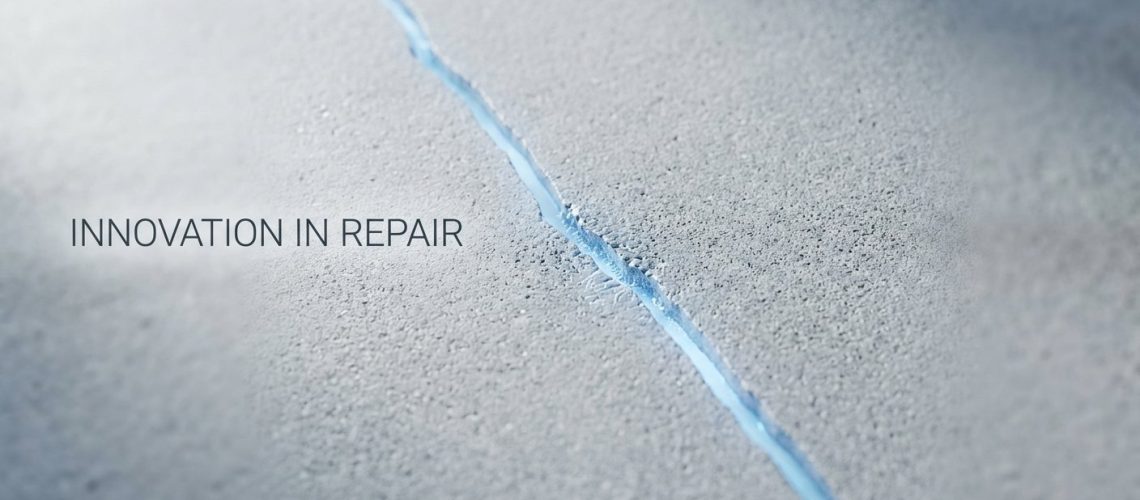
When concrete cracks, spalls, or leaks, the instinct is to reach for the nearest repair product and seal the problem. Yet within months—sometimes weeks—the issue returns. Property managers across South Florida spend thousands annually on concrete repairs that fail repeatedly, creating a costly cycle of patch-and-pray maintenance that never addresses the root cause.
The concrete repair product market has exploded with options promising permanent fixes, but the reality is more complex. Most retail and contractor-grade products are designed for surface-level cosmetic repairs, not the structural water intrusion problems that plague commercial buildings in harsh climates. Understanding which products actually work—and more importantly, when traditional products won’t work at all—can save property managers significant time and money.
Why Traditional Concrete Repair Products Fail

Before evaluating the best concrete repair products, it’s essential to understand why conventional solutions have such high failure rates in commercial applications, particularly in South Florida environments.
Standard repair materials including polyurethane caulks, silicone sealants, and epoxy patching compounds share a fundamental limitation: they work from the outside in. These products sit on the surface or in visible cracks, attempting to create a barrier against water. However, concrete is a porous material with an extensive network of microscopic voids and capillaries that extend far beyond what’s visible on the surface.
South Florida’s unique environmental conditions accelerate product failure. Saltwater exposure causes chemical degradation of many sealants. Humidity levels averaging 60-80% create constant moisture cycling that weakens adhesive bonds. UV radiation breaks down polymer chains in surface coatings. Most critically, thermal expansion from temperature swings—concrete surfaces can reach 150°F in direct sunlight—creates micro-movements that rigid repair materials cannot accommodate.
The coefficient of thermal expansion mismatch between repair products and concrete substrate is a technical reality most contractors ignore. When concrete expands and contracts at a different rate than the repair material, new separation points develop, often within the first seasonal cycle.
Evaluating Exterior Concrete Repair Products

For exterior applications on commercial properties, several product categories dominate the market, each with specific advantages and limitations.
Hydraulic Cement Products
Hydraulic cement formulations work by expanding as they cure, theoretically creating a tight seal against water. These products excel in emergency repairs and can set underwater, making them popular for active leak situations. Brands like Quikrete and Sakrete offer various hydraulic cement formulations.
The reality: hydraulic cements provide temporary stopgaps but crack under structural movement. Their rigid nature makes them inappropriate for joints, control points, or anywhere concrete experiences regular expansion and contraction. Expect 1-3 years of service life in South Florida applications before re-repair becomes necessary.
Polymer-Modified Repair Mortars
These advanced mortars incorporate acrylic or latex polymers to improve adhesion, flexibility, and water resistance compared to standard cement mixtures. Premium products from manufacturers like Sika, BASF, and Euclid Chemical offer impressive technical specifications.
For horizontal surfaces like parking deck repairs or plaza waterproofing, polymer-modified mortars represent the best conventional approach. However, they require meticulous surface preparation—grinding, acid etching, or scarification—creating significant disruption in occupied buildings. Application also demands specific temperature and humidity windows, complicating scheduling in South Florida’s variable conditions.
Epoxy Injection Systems
Two-part epoxy systems injected into cracks offer structural bonding strength exceeding the concrete itself, with compressive strength ratings above 10,000 PSI. For structural crack stabilization in non-leaking situations, epoxies provide excellent results.
The limitation: epoxies are rigid. They create a repair that’s stronger than surrounding concrete, which sounds positive until you understand stress concentration. The repaired area becomes an inflexible point in an otherwise dynamic structure, often causing new cracks to form adjacent to the repair. For water intrusion problems, epoxies also lack the expansive properties needed to fill the full void network behind visible cracks.
Concrete Leak Repair Products: A Different Challenge
Repairing concrete leaks requires a fundamentally different approach than structural or cosmetic repairs. Water follows the path of least resistance through concrete’s interconnected void network. Sealing only the visible entry point is like plugging one hole in a sieve.
Polyurethane foam injection systems represent the most advanced conventional approach to leak repair. When injected behind concrete surfaces, these foams expand up to 20 times their liquid volume, filling voids and creating a water-displacing barrier. Various formulations offer different expansion rates and final densities.
However, standard polyurethane foams still face longevity challenges. UV degradation occurs if any material remains exposed to sunlight. More significantly, the foam itself can absorb moisture over time, gradually losing its water-blocking effectiveness. Reactivation of leaks within 3-5 years is common, especially in high-pressure situations like below-grade parking structures.
The Technology Gap: Why Proprietary Solutions Emerged
The persistent failure of off-the-shelf concrete repair products in commercial applications created demand for specialized solutions. This is where proprietary polyvinyl injection technology represents a significant advancement over traditional approaches.
Unlike surface sealants or foam expansions, polyvinyl technology works by penetrating the concrete’s entire void network at the molecular level. The material’s low viscosity—measured in centipoise similar to water—allows it to flow through microscopic capillaries unreachable by thicker products. As it cures, it forms a flexible yet water-impermeable membrane throughout the substrate.
The coefficient of elasticity matches concrete substrate properties, eliminating the expansion mismatch that causes traditional repairs to fail. The material accommodates thermal cycling without degrading adhesion. Chemical resistance to saltwater, pH variations, and South Florida’s aggressive environmental conditions provides durability measured in decades rather than years.
Perhaps most importantly for commercial properties, the injection process requires no demolition, no tenant displacement, and no extended curing periods. Work occurs from the interior side of affected surfaces without disturbing building operations—a critical advantage when compared to traditional exterior waterproofing approaches requiring scaffolding, surface grinding, and multi-day cure times.
Driveway and Horizontal Surface Repairs
For driveway concrete repair products and other horizontal applications, selection criteria shift toward compressive strength and surface durability rather than waterproofing alone.
Self-leveling polyurethane concrete repair compounds offer the best performance for spalled or deteriorated driveway surfaces. These products flow into depressions, self-level, and cure to a durable surface that bonds chemically to existing concrete. Application speed is excellent—most formulations cure in 1-2 hours.
For crack filling in driveways, hot-pour rubberized asphalt typically outperforms rigid fillers. The flexibility accommodates seasonal movement, and the application process ensures deep penetration. While aesthetically less appealing than color-matched concrete products, the longevity advantage is substantial—4-7 years versus 1-2 years for rigid crack fillers.
For commercial parking structures with horizontal surface deterioration, the calculation changes. The cost and disruption of traditional repair mortars must be weighed against the frequency of re-repair. Many property managers discover that repeated surface repairs cost more over a 10-year period than comprehensive solutions addressing underlying moisture migration.
Making the Right Choice for Your Property
Selecting the best concrete repair approach requires honest assessment of the actual problem, not just the visible symptoms.
Surface cosmetic damage without water intrusion: polymer-modified repair mortars provide cost-effective solutions with 5-10 year service life when properly applied.
Structural cracks without leaking: epoxy injection systems offer maximum strength restoration with minimal material usage.
Active water intrusion through cracks, joints, or construction seams: this is where traditional products consistently underperform. The recurring cost of repeated repairs—both material expenses and the operational disruption each repair cycle creates—quickly exceeds the investment in permanent solutions.
For South Florida commercial properties, environmental factors amplify every product limitation. Saltwater accelerates degradation. High humidity prevents proper curing of many materials. Thermal cycling stresses even flexible products. UV exposure ages surface treatments prematurely.
The hidden cost factor property managers often overlook: tenant complaints and lease implications. Each time a repair fails and leaking resumes, tenant satisfaction drops and liability exposure increases. The operational cost of managing recurring problems—work orders, contractor coordination, tenant communications—adds substantial burden beyond direct repair expenses.
The Investment Perspective: True Cost Comparison
A typical parking garage leak repair using conventional polyurethane foam injection costs $800-1,500 per location. With a 3-5 year failure rate, property managers face $2,400-4,500 in direct costs over 15 years, plus repeated disruption and tenant impact.
Comprehensive solutions using advanced polyvinyl injection technology carry higher initial investment—typically $2,000-3,500 per repair location depending on complexity. However, with 5-year warranties backed by permanent results, the 15-year cost remains at the initial investment level with zero re-work.
The financial analysis becomes even more favorable when considering avoided costs: no scaffolding rental, no extensive surface preparation, no tenant relocation, and completion timelines 5x faster than traditional waterproofing approaches. For occupied commercial buildings, operational continuity has quantifiable value.
Frequently Asked Questions
What is the best thing to patch concrete with?
For surface patching of spalled or damaged concrete, polymer-modified repair mortars provide the best balance of strength, adhesion, and durability. These products bond chemically to existing concrete and flex with minor substrate movement. However, if water intrusion is involved, surface patching will fail regardless of product quality—the leak source must be addressed from within the concrete structure itself.
What is the 1/2/3 rule for concrete?
The 1/2/3 rule refers to concrete mix water content: for every 1 part cement, use 2 parts sand and 3 parts aggregate. This ratio provides optimal strength and workability for general applications. For repair products, following manufacturer specifications is more critical than traditional mix ratios, as modern polymer-modified materials use precise formulations optimized for specific repair scenarios.
What is the strongest fixing into concrete?
Epoxy anchor systems provide the strongest mechanical fixing into concrete, with pull-out strengths exceeding 10,000 PSI when properly installed. For bonding repair materials to concrete, epoxy adhesives similarly offer the highest bond strength. However, strength alone doesn’t ensure repair success—flexibility, thermal compatibility, and moisture resistance matter equally in real-world applications.
How to get concrete to stick to old concrete?
Achieving strong bonds between new and old concrete requires thorough surface preparation: remove all loose material, contaminants, and laitance through mechanical grinding or acid etching. Apply a bonding agent—either epoxy-based or polymer-modified cement slurry—before placing new concrete. The surface must be saturated but not wet (SSD condition). For critical applications, polymer-modified repair mortars with built-in bonding agents eliminate the separate bonding step while ensuring superior adhesion.
When to Call for Professional Assessment
Water intrusion through concrete isn’t a DIY project, and choosing the wrong repair approach wastes money while allowing damage to progress. If you’re managing a commercial property in South Florida experiencing concrete leaks—whether in parking structures, building envelopes, plaza decks, or foundation walls—professional assessment identifies the actual problem before spending money on repairs that won’t last.
CLWizard specializes in permanent concrete leak repair using proprietary polyvinyl injection technology developed specifically for South Florida’s challenging environment. Our non-disruptive process works from building interiors without scaffolding or tenant displacement, with completion timelines 5x faster than traditional methods. Every repair includes a 5-year warranty backed by over a decade of permanent results in high-profile South Florida properties.
Schedule a free property assessment to evaluate your concrete repair challenges and explore permanent solutions that eliminate recurring expenses. Contact CLWizard today to speak with our engineering team about your specific situation.
